
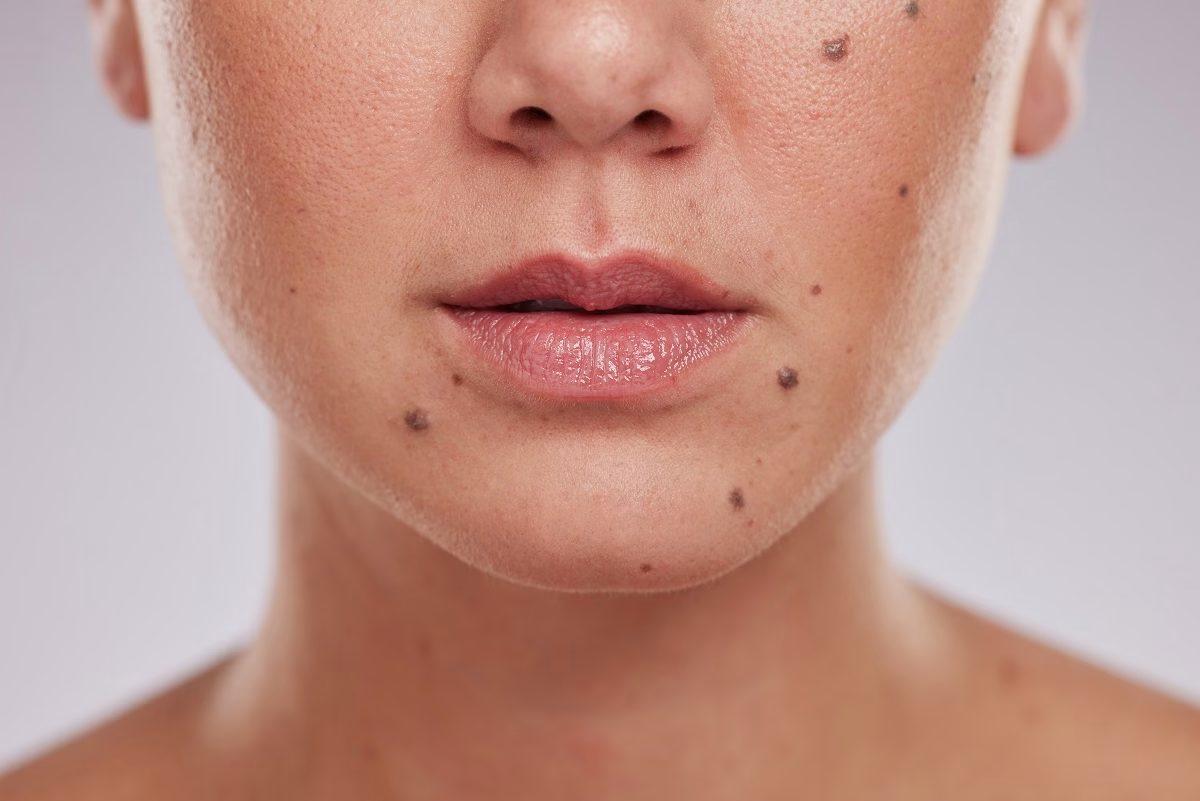
Certain benign (noncancerous) growths that appear on the skin are called moles. In some cases, they are called nevus or beauty marks, and most of the time, they are harmless. Commonly, these skin growths should not hurt, itch, or bleed, and they can last up to 50 years. However, if you suspect that a mole is abnormal, it is recommended to see a dermatologist.
Furthermore, the skin is the biggest organ in the body. In general, a nevus is a specific skin growth that appears on the skin and may have different colors. For example, a mole can be in the color of natural skin tone to brown or black. While they can appear anywhere on the body, sometimes moles appear in groups.
Most of the time, moles appear in early childhood and during the first 20 years of life. However, it is considered normal for people to have between 10 and 40 moles by adulthood. Usually, the life cycle of a mole is about 50 years. You should also know that these skin growths may change slowly and become raised and lighter in color over time. Furthermore, some skin moles may develop hair on them.
Generally, skin moles are very common, and most people have about 10 to 40 of them.
Types of Moles
Physicians have divided these skin growths into 3 categories. For example:
- Common Nevi – This is a regular mole that often is small and may have the following colors. For example, pink, tan, or brown.
- Congenital (present at birth) Nevi – These skin growths are often present at birth. This type of mole affects about 1 in 100 newborns. Furthermore, people with congenital moles are slightly more prone to melanoma. Therefore, if a skin mole on your baby is larger than 8 millimeters in diameter, you should visit a doctor immediately.
- Dysplastic Nevi – In such cases, people develop moles that are larger than a pencil eraser and irregularly shaped. Most of the time, they have uneven color with dark brown centers and lighter edges. According to some studies, dysplastic Nevi tend to be hereditary. People with this type of mole may develop about 100 of them. In addition, the risk of developing malignant (cancerous) melanoma is higher in people with dysplastic Nevi. You should visit a dermatologist if you notice any changes in a mole.
Are Pigmented Lesions the Same as Moles?
The medical term “pigmented lesion” is often used to describe normal moles, sun freckles, or age spots (also known as lentigines). While most of the time, pigmented lesions do not become cancerous, you should inform your doctor about any changes you notice. If your dermatologist suspects a mole is cancerous, he/she may perform a biopsy. During this procedure, doctors will take a sample of the mole for testing. They will look for cancerous cells under a microscope.
Causes and Risk Factors
These specific skin growths are made up of certain cells called melanocytes. They are pigments that give your skin its color. Mostly, moles grow in a cluster instead of spreading throughout the skin. Furthermore, doctors have identified some factors that may increase your risk of developing them. Check some examples below:
- Prolonged exposure to the sun and UV (ultraviolet) light
- Long-term use of tanning beds and sunlamps
- High number of moles (more than 50 ordinary moles)
- Atypical moles (also known as dysplastic Nevi) – These are inherited moles that are large in size, have irregular shapes, and uneven color.
- Congenital Nevi
- Family history of skin cancer – If you have a parent or sibling with melanoma or another type of skin cancer, your risk of developing it significantly increases.
- Weakened immune system
How to Prevent Moles?
Unfortunately, there is no way to prevent moles. However, you can take steps to prevent skin cancer (such as melanoma). For example:
- Wear sunscreen when outdoors
- Regularly examine moles at least once per month
- Limit the time you spend in the sun
Doctors often perform a biopsy to determine whether a mole is cancerous. In addition, moles can develop in any cutaneous or mucosal (including the mouth, eyes, and genitals) surface.
Diagnosis
Usually, doctors recommend monitoring your moles and checking them each month, especially if you have multiple moles on the skin, have a family history of melanoma, or have fair skin. Furthermore, you should limit the time you spend in the sun. Early detection and immediate treatment often help prevent serious complications. In most cases, when your doctor notices an abnormal mole, you can be referred to a dermatologist. This is a healthcare professional specializing in skin disorders.
What Are The Signs of a Cancerous Mole?
Most moles are benign (noncancerous), but you should inform your doctor about any changes to existing moles you notice or if you develop new moles after the age of 30. Suspicious changes in a mole include changes in size, thickness, color, or shape. In addition, moles that bleed or cause itching are also suspicious. Check some additional signs of moles that could be cancerous. For example:
- Asymmetry – One half of the mole does not match the other half.
- Border – Border edges of the mole (including ragged, blurred, or irregular).
- Color – One or more moles do not have the same color throughout. It may have multiple colors, including tan, brown, black, blue, white, or red.
- Diameter – The diameter of a mole is larger than the eraser of a pencil.
- Evolution – Another suspicious change can be a raised mole after being flat.
Melanoma mostly affects women (especially between the ages of 25 and 29), but it may also affect men. The most common site of melanoma in males is the back.
Treatment
Commonly, people do not need to remove their moles, but if you choose to remove one of them, there may remain a scar. Never try to remove a mole at home, even if you are using nonprescription products that burn, freeze, or use lasers.
Frequently Asked Questions
How does a dermatologist determine if moles are a concern?
While most moles are noncancerous and do not need to be removed because they can leave scars, do not hesitate to see a dermatologist if you suspect a mole has changed in size, diameter, or color. To determine if a mole is cancerous or not, doctors often perform a biopsy. This test involves taking a small sample of a mole for testing under a microscope. It is done to check for cancerous cells. In most cases, biopsy results are made in less than one week.
What makes skin moles darker?
Most of the time, moles become darker after exposure to the sun, during pregnancy, or during puberty. Hormonal changes cause a mole to become darker during pregnancy.
What does it mean if I have a new mole after age 30?
It is very important to be cautious if you develop new moles after 30. While most of the time they are benign, there is an increased chance of developing malignant ones. Ask your healthcare provider if you have any other questions.