

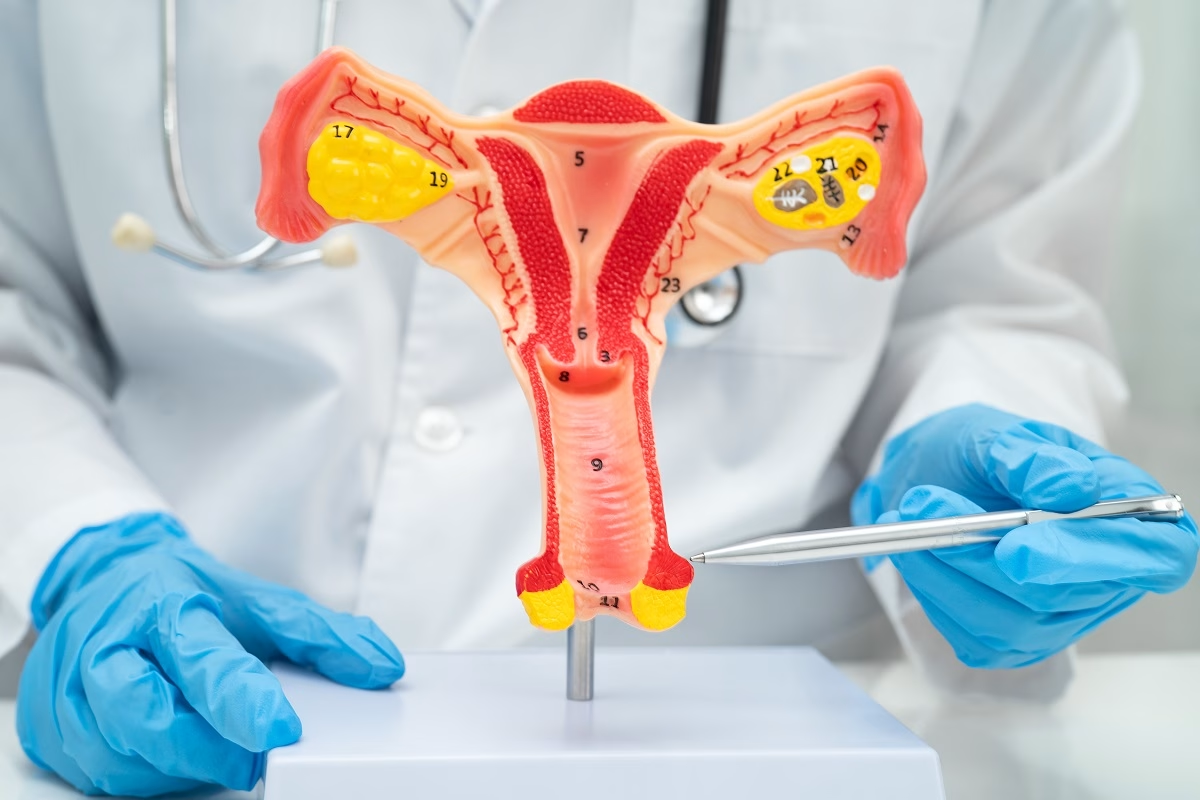
A congenital (present at birth) condition that causes a baby to be born with an underdeveloped or missing uterus and/or vagina is called Mayer-Rokitansky-Kuster-Hauser (MRKH) syndrome. Doctors often recommend surgery to create a vagina, which allows one to have children with IVF and a gestational carrier.
However, the ovaries and vulva (external genitals) often develop properly. In rare cases, MRKH syndrome may also cause the kidneys and spine to form differently. In most cases, people with this congenital disorder experience symptoms during their teen years when they do not get their period. Sometimes, sex is painful or impossible because the vaginal canal is too short and narrow.
In addition, MRKH syndrome makes it impossible for a female to become pregnant without medical help. One way to become pregnant is through IVF, especially if your ovaries work properly and produce eggs. In some cases, this syndrome is called Müllerian agenesis, Müllerian aplasia, congenital absence of the uterus and vagina, or Rokitansky syndrome.
Types of MRKH Syndrome
Doctors have divided this condition into 2 types. These include:
- Type 1 – Those who develop the first type of this condition often have normally functioning ovaries and fallopian tubes but have a blocked or missing upper vagina, cervix, and uterus. Usually, there are no other affected organs.
- Type 2 – In such cases, there is a blocked or missing upper vagina, cervix, and uterus, and the affected person also has problems with the ovaries, fallopian tubes, spine, kidneys, and other organs.
Symptoms
The symptoms of this syndrome often appear differently among people. It depends on the type of condition, age, gender, and overall health. Mostly, people begin to experience symptoms before the age of 16. They may also experience mood changes, lack of menstrual periods, bloating, and other symptoms. Usually, women with MRKH syndrome develop breasts and get underarm and pubic hair, but may experience pain during vaginal sex for the first time. It happens because the vagina is thinner, narrower, and shorter than usual. If any of the previous symptoms occur, immediately contact your healthcare provider.
Causes and Risk Factors
Healthcare providers do not fully understand what exactly causes MRKH syndrome, but they think there is a combination of abnormal genes and chromosomes. However, this congenital disorder is not traced to one gene, and it is not caused by anything during pregnancy.
Usually, this condition appears in the first weeks of fetal development, when the reproductive system forms. In normal circumstances, the fallopian tubes, uterus, cervix, and upper vagina grow from the Müllerian ducts, but in people with this syndrome, these ducts do not develop properly.
Furthermore, doctors noticed that most people do not seem to have any known risk factors. Some experts think MRKH syndrome runs in families, but may also occur without a family history of the disease.
What Are The Long-term Effects of MRKH Syndrome?
Those who develop MRKH syndrome may also experience some complications, especially if they do not get treatment. Check some examples below:
- Infertility – This complication affects the ability of a woman to become pregnant.
- Vaginal hypoplasia – Shortened or absent vagina that may cause pain during sexual intercourse.
- Cyclic pelvic pain – In this case, people experience chronic (long-term) pain due to menstrual blood that is trapped.
- Endometriosis
- Renal problems – For example, unilateral renal agenesis (missing one kidney), ectopic kidney, kidney failure, and others.
- Skeletal abnormalities – Some people may also experience spinal anomalies (such as scoliosis or Klippel-Feil syndrome).
- Hearing loss (deafness)
- Pulmonary valve stenosis or atrial septal defects
- Psychological and emotional issues – Some people with MRKH syndrome may experience depression, low self-esteem, emotional distress, and others.
- Sexual dysfunction
- Increased risk for kidney stones, urinary tract infections (UTIs), and ureteral obstructions
This article does not contain a complete list of MRKH syndrome complications. In any case, you can consult your healthcare professional about ways to reduce the risk or even prevent them. In addition, it is not possible to prevent this congenital disorder because doctors do not fully understand what causes it.
Diagnosis
Commonly, doctors diagnose this syndrome when teenagers do not get their first menstrual period. In any case, they often perform a physical examination in which a doctor will insert a gloved finger into the vagina to measure the depth and width. Therefore, they may also perform some imaging tests to determine which organs are affected. Physicians often perform MRI (magnetic resonance imaging) scans and ultrasounds. Sometimes, they may also perform blood tests to check hormone levels, which may indicate problems with the ovaries and other organs.
Treatment
There are some treatment options that may help people with MRKH syndrome ease their symptoms and improve their quality of life. However, it depends on some factors, including the severity and symptoms of the affected person, age, gender, existing health problems, and preferences. Check some options often recommended by doctors below:
- Vaginal dilators – This treatment involves specific tube-like devices that help stretch the vagina. These tubes are made of plastic or silicone and vary in length and width.
- Vaginoplasty – During this procedure, surgeons will create a vagina. In general, there are several ways to perform vaginoplasty, but most of them involve creating a hole and lining it with tissue from another part of the body.
- Uterus transplant – This is a major surgery in which doctors will place a donor uterus inside someone without it. Moreover, uterine transplants give people an opportunity to become pregnant. In general, this surgery is performed rarely.
Frequently Asked Questions
What are the psychological effects of MRKH syndrome?
People with this condition may experience low self-esteem, reduced quality of life, anxiety, depression, and others. However, doctors may recommend finding a support group of visit a counselor to cope with negative thoughts if you are diagnosed with MRKH syndrome.
Can you get pregnant with MRKH?
Yes, people who develop this syndrome can have a child, but with medical help, especially if their ovaries are functioning properly.
What does a woman with MRKH look like?
Most of the time, women with MRKH syndrome look like any other female with normal breasts and pubic hair, but she does not have menstrual periods. However, if a person develops MRKH syndrome type 2, it may lead to multiple health problems (such as UTIs or absent kidneys), scoliosis, hearing problems, and other health issues. Ask your healthcare provider if you have any other questions.