

A rare disease that occurs when the back of the eye does not develop properly is called morning glory syndrome (MGS). In people with this condition, the back of the eye has a funnel shape instead of a globe-shaped eyeball. Unfortunately, it is not possible to cure this condition, but with treatment, you can reduce the risk of vision problems and retinal detachment.
The name of this condition comes from the form that appears as a glory flower when you look into the retina. Furthermore, MGS is a congenital (present at birth) condition that occurs due to disruptions of eye development during pregnancy. In most cases, this disorder is diagnosed before the age of 2, but it may be identified later in life. Rarely, MGS may cause only structural and appearance differences of the internal eye without causing symptoms. In such cases, the condition is called morning glory disk anomaly.
Generally, MGS occurs quite rarely, and it affects about 63,000 people under 20 years old in the whole world.
What Are The Symptoms of Morning Glory Syndrome?
This congenital disorder mostly affects the left eye more than the right and may cause several symptoms. However, not everyone who develops this syndrome will experience the following symptoms. Check the most common symptoms of MGS below:
- Myopia (also known as nearsightedness)
- Irregularities or gaps in the visual field, including scotomas (bling spots) and a larger natural blind spot. While it is considered normal to have a small blind spot, in people with MGS, it can become bigger.
- Strabismus (also called crossed eyes)
- Leukocoria (it causes the pupil to appear white, silvery, yellowing, or gray)
It is not rare for people with MGS to develop other serious health conditions. That’s why they may also experience additional symptoms. Check some examples below:
- Neurofibromatosis type 2 (NF2)
- Aicardi syndrome
- Chiari malformation type I
- Duane syndrome (in some cases, it is called Okihiro syndrome)
- PHACE syndrome
- Moyamoya disease
- Encephalocele
For more details, discuss it with your healthcare professional.
Causes
Physicians do not fully understand what exactly causes this condition because it occurs quite rarely and was first described in 1969. However, experts believe that underdevelopment of the blood vessels that supply the eyes and/or disruptions in the eye and optic nerve development could play a role. They have also observed that MGS negatively affects the left eye twice as commonly as the right eye. As a result, they suspect that there is a problem with the blood vessels, but the baby’s heart is developing properly and has the opening between the left and right sides. This opening often closes shortly after birth.
However, if the developing baby is at risk of developing small blood clots (also called microemboli), the hole in the heart may allow them to pass from the left to the right side of the heart. As a result, it may travel to the brain and get stuck, which negatively affects blood vessels. While this syndrome may occur due to a genetic and inherited disorder, more research is needed to confirm this.
What Are The Potential Complications of Morning Glory Syndrome?
The most common complication of this syndrome is retinal detachment. Approximately 40% of people with MGS develop this complication. However, it may also cause other complications. Check some of them below:
- Amblyopia (also known as lazy eye)
- Reduced vision
- Neovascularization of the eye (this condition causes blood vessel growth that negatively affects your vision)
- Retinoschisis (retinal layer separation)
- Moyamoya disease (a serious health condition that restricts blood vessels in the brain)
- Transsphenoidal basal encephalocele
- Facial defects (such as cleft lip or cleft palate)
- Endocrine problems (including pituitary gland dysfunction)
The previous list does not contain a complete list of complications. In any case, you can consult with your physicians about measures to reduce the risk of developing them. Furthermore, there is no way to prevent this syndrome because doctors do not fully understand what exactly causes it.
Diagnosis
When doctors suspect MGS, they may refer you to an eye care specialist (including a retina specialist) for further testing. They will ask you some questions about the symptoms and family history to gather more information about your disease. Usually, physicians perform the following tests to confirm MGS or to rule out other disorders that cause similar symptoms. For example:
- Optical coherence tomography
- MRI (magnetic resonance imaging) scans
- Fluorescein angiography
- Eye examination – These include visual field test, visual acuity test, and slit lamp examination.
Treatment
This condition occurs due to structural differences of the eye that occur during pregnancy. Most of the time, these changes cannot be repaired or treated. It means MGS cannot be cured. That’s why doctors often recommend the following options to ease the symptoms, prevent life-threatening complications, and improve your quality of life. These include:
- Surgery to repair a detached retina (it also helps prevent serious complications, such as permanent damage and a complete loss of vision)
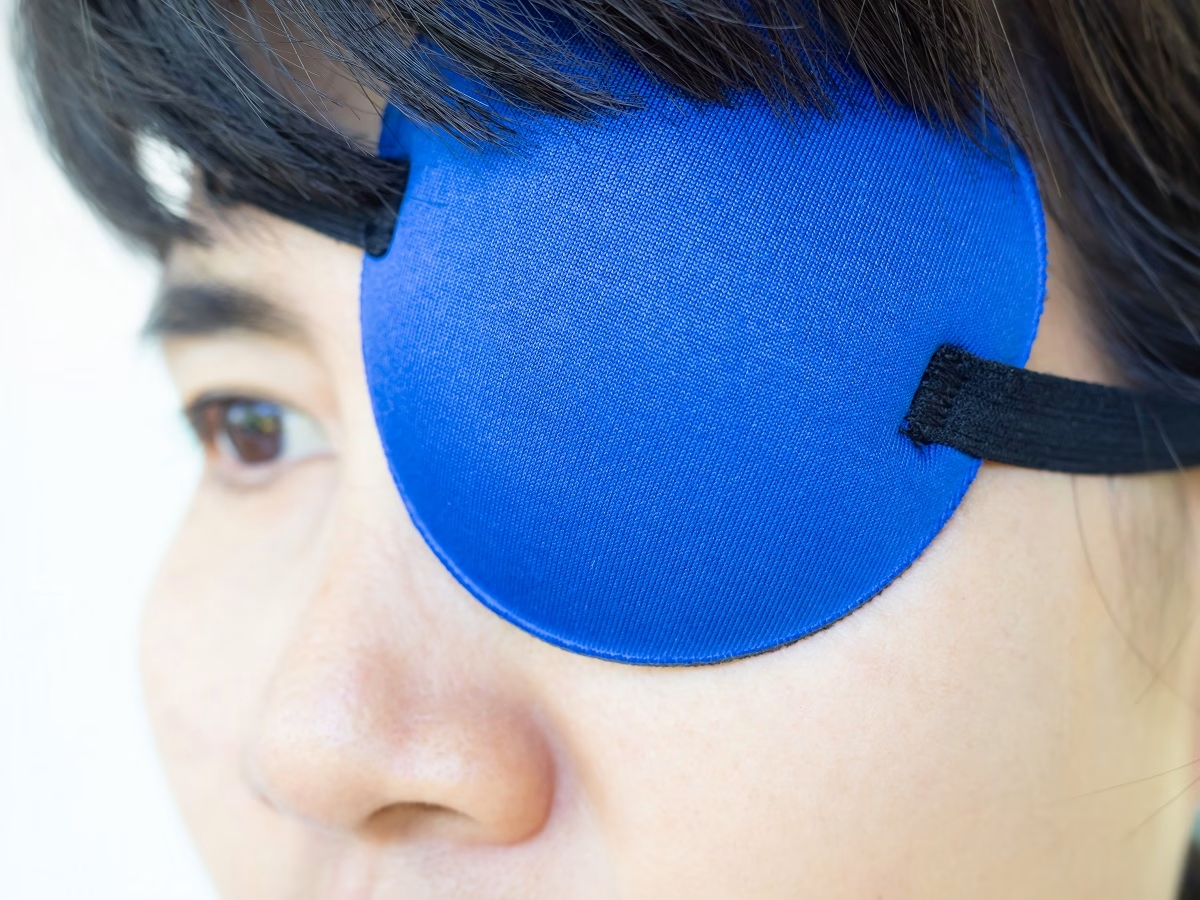
- Doctors may also recommend wearing an eye patch to keep the lazy eye from worsening
Sometimes, doctors may recommend prescription eyewear and other treatments to relieve the symptoms.
Frequently Asked Questions
When should I go to the emergency room?
Usually, people who develop a retinal detachment should call 911 or immediately go to the nearest emergency room (ER). Otherwise, it may lead to blindness (a complete loss of vision). Check below some symptoms of a retinal detachment:
- Black spots or a sudden increase in floaters in your vision
- Photopsia (flashes of light)
- Darkening vision
- Sudden onset of blurred vision
What is the prognosis for morning glory syndrome?
Most of the time, this condition is unilateral with equal involvement of the right and left eyes. In rare cases, this disorder is bilateral. In general, the prognosis of this disorder is poor, in the 20/100 to 20/200 range. Furthermore, approximately 30% of people develop a severe form of retinal detachment.
What can I expect if I have morning glory syndrome?
In most cases, this disorder is diagnosed in early childhood. It is a lifelong syndrome, and there is no way to cure or reverse it. While MGS is not life-threatening, it may cause serious complications that negatively affect your vision. It is very important to see a doctor regularly, especially if you have one-sided MGS. In this case, the unaffected eye may also develop certain problems (such as cataracts).
What is the morning glory syndrome?
This is a disorder that negatively affects the development of the eye during pregnancy. If you have any other questions, ask your healthcare provider.