
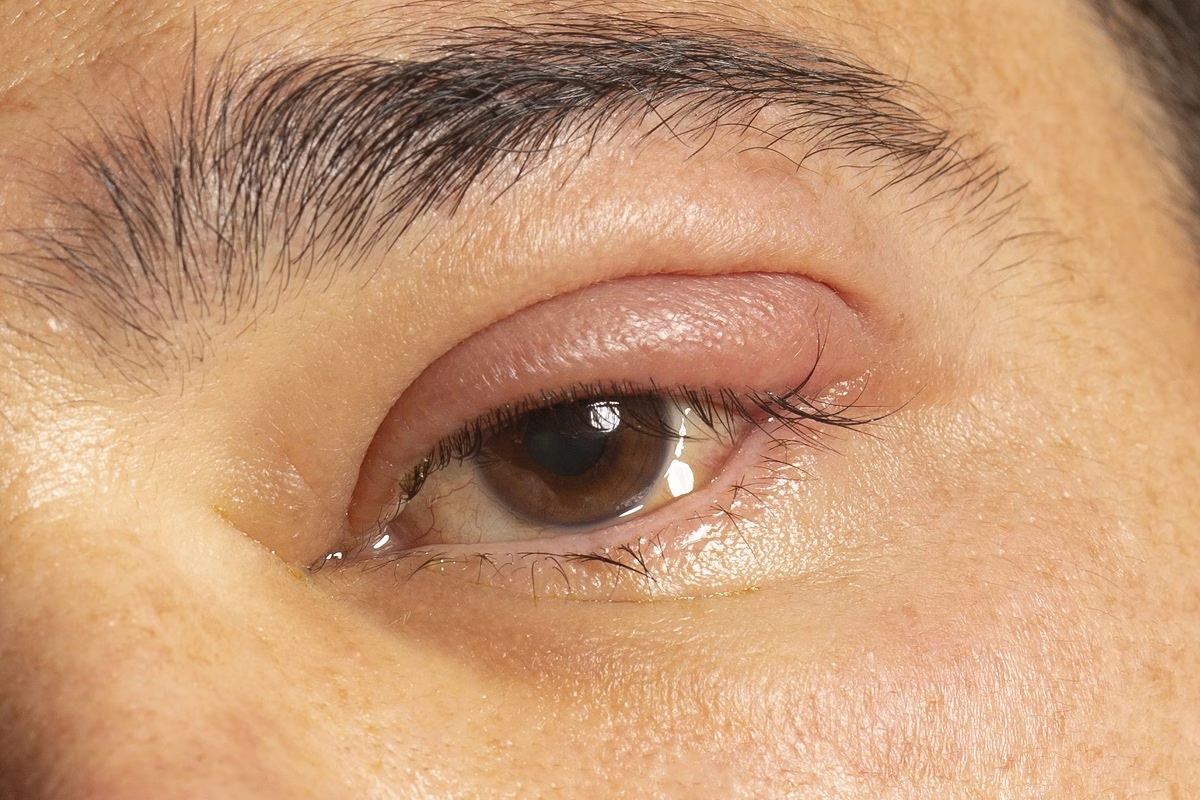
A complication of a severe form of conjunctivitis is called symblepharon. Conjunctivitis is a disorder that causes inflammation of the surface of the eye. However, the conjunctiva is a membrane that lines the whites of the eyes and the insides of the eyelids. This complication of conjunctivitis is an adhesion between these two layers.
In other words, symblepharon occurs when severe inflammation makes your eye tissue swell and stick together. Thus, the scars can form and fuse the layers permanently. Sometimes, people may develop more than adhesions. Without treatment, people may experience multiple episodes of symblepharon.
Symptoms
Usually, people are able to see symblepharon in their eye because it looks like a band of tissue that connects the inner eyelid to the eyeball. When you cannot notice it, you might not be able to open your eyelid completely, or the eyeball cannot move in all directions. Check below for other symptoms of symblepharon:
- Ptosis – it occurs when this complication causes drooping eyelids.
- Entropion – In some cases, symblepharon can turn your eyelid inward toward your eye.
- Lagophthalmos – In such cases, symblepharon prevents your eyelid from closing completely.
- Diplopia – It means you cannot move your eyeball properly, which often causes double vision.
Furthermore, any of the previous symptoms may cause irritation to your eyes, which may also cause additional symptoms. For example:
- Redness
- Increased sensitivity to light
- Tearing
- Dry eyes
It is recommended to visit a doctor if any of the previous symptoms occur.
Causes
Usually, people develop this complication due to long-term inflammation of the conjunctiva (conjunctivitis). This part of the eye lines the insides of the eyelids and the white part of the eyeball. In severe cases, these layers can stick together and cause scarring.
In some cases, symblepharon can occur due to inflammation of the cornea (keratoconjunctivitis). This is the clear membrane that covers the iris. Without medical care, it may lead to adhesions between the conjunctiva and cornea. Commonly, severe conjunctivitis or keratoconjunctivitis occurs due to infections, injuries, and autoimmune disorders. Check below some examples:
- Ocular herpes
- Trachoma
- Side effects of eye medicines
- Complications of eye surgery
- Chemical burns
- Adenoviral keratoconjunctivitis
- Graft vs. host disease
- Ocular cicatricial pemphigoid
- Mucous membrane pemphigoid
- Bullous pemphigoid
- Erythema multiforme
- Stevens-Johnson syndrome
- Scleroderma
- Lichen planus
- Sarcoidosis
- Granulomatosis with polyangiitis
What Happens if Symblepharon is Left Untreated?
People who develop symblepharon may also experience some additional complications. Check below some of them:
- Trichiasis
- Obstruction of the tear system
- Vision loss
- Chronic eye irritation and dryness
- Vision changes (including double or blurred vision)
- Restricted eye movement
- Scarring
- Keratinization
- Low self-esteem
- Anxiety
- Epidermolysis Bullosa
This document does not contain a full list of symblepharon complications. In any case, you can consult with your healthcare professional about ways to reduce the risk of previous complications.
How to Prevent Symblepharon?
It is very important to get medical care if you have severe conjunctivitis that does not improve. In such cases, it causes your eyes to be red, swollen, and painful. However, in mild cases, the condition goes away on its own. Do not hesitate to visit a doctor if symptoms do not disappear within 1-2 weeks.
Diagnosis
Usually, the diagnosis of symblepharon begins with an eye examination to check for irregularities linked to this complication. Doctors may give you eye drops to make it more comfortable. During this examination, doctors easily identify tissues that are attached and their exact location. They will also look for the type of symblepharon you have.
If your doctor cannot identify what exactly causes your symblepharon, he/she may perform some tests. These include an eye swab or a blood test. In some cases, people develop symblepharon due to certain chronic diseases.

Treatment
It is important to remember that a symblepharon is easier to prevent than to treat. If your doctor knows in advance that you are more likely to develop a symblepharon or you have disorders that may cause it, you can get treatment to prevent it. Check below some treatments often used to manage the underlying condition:
- Corticosteroids (to reduce inflammation)
- Antibiotics (for bacterial infections) or antivirals (for viral infections)
- Immunomodulators (for autoimmune disorders)
Previous medicines can be taken orally or as drops in the eye. They help reduce inflammation. Thereafter, doctors may apply a dressing of amniotic membrane to help prevent or reduce scarring. It can be a disk that sticks similarly to contact lenses, or it can be attached surgically to the affected eye.
Symblepharon Surgery
When it is not possible to prevent a symblepharon, doctors may treat it after the fact. In general, doctors recommend different surgeries for people with symblepharon because they depend on its severity. While some people need a simple procedure, others may need a complex oculoplastic surgery. Check below some ways on how it is performed:
- Symblepharon release – It means disconnecting the adhesions between the conjunctiva layers and removing scar tissue from them.
- Tissue graft – During this procedure, surgeons will use tissue from another part of the eyeball or mucous membrane (such as the inside of the lip) to replace tissue removed from your eye.
- Oculoplastic reconstruction – When a symblepharon negatively affects your conjunctiva fornix, surgeons may need to reconstruct it. If this complication affects your cornea, you may need keratoplasty.
Frequently Asked Questions
What is the prognosis with symblepharon?
The outlook depends on the severity of the condition, how much eye tissue is involved, and your response to treatment. While some people heal completely, others may experience permanent damage. Moreover, in rare cases, people may even develop chronic diseases that cause repeated episodes of symblepharon.
Is symblepharon painful?
Yes, this complication of a severe form of conjunctivitis is often characterized by a painful, blind eye. Do not hesitate to get medical help if you suspect you have a symblepharon.
Can dry eye cause symblepharon?
In rare cases, symblepharon can occur as a complication of multiple ocular diseases. These include dry eye syndrome, Stevens-Johnson syndrome, cicatricial pemphigoid, chemical injury, erythema multiforme, pemphigus bullosa, and others. Ask your healthcare provider if you have any other questions.