
An eye condition that increases the pressure inside the eye higher than normal is called ocular hypertension. Usually, in people with this condition, there is no damage to the optic nerve. Moreover, this disorder often refers to high intraocular pressure (IOP) or high pressure inside the eye. One of the most common causes of this disorder is fluid drainage failure.
Normally, the eyes continuously produce a clear fluid (called aqueous humor) that flows in front of each eye and then drains out. Commonly, the same amount of fluid goes in and out, but when the fluid does not leave the eye, it may lead to ocular hypertension. About 11 to 21 millimeters of mercury (mmHg) is considered a normal eye pressure. Generally, this is the same measurement used in blood pressure. When the ocular pressure is higher than 21 mmHg (in one or both eyes), it is recommended to see a doctor.
In addition, if the condition affects only one eye, the condition is called unilateral ocular hypertension, but if it occurs in both are, it is known as bilateral ocular hypertension.
According to some recent data, about 3 to 6 million people suffer from ocular hypertension in the United States. Furthermore, people with ocular hypertension are at higher risk of developing glaucoma.
Symptoms
In most cases, IOP does not cause any symptoms. That’s why regular eye examinations are usually recommended by doctors. Rarely, ocular hypertension may cause eye pain with movement or when touching the eyes. While some eye disorders can cause dizziness or headaches, this does not happen in people with IOP.
Causes
In most cases, people develop IOP due to excessive aqueous humor production or a blockage in the eye’s drainage system (also known as the anterior chamber angle). It is localized near the front of the eye (between the cornea and iris). Check below some possible causes of fluid buildup:
- Closed drainage angle
- Anterior chamber is open, but not draining the fluid properly
- Protein flakes or pigment are blocking the drainage system
- Eye cancer causes blockages in the anterior chamber angle
- Previous eye damage
Furthermore, some recent studies have shown that stress can contribute to ocular hypertension.
Risk Factors
Healthcare professionals have identified some factors that may increase your risk of IOP. While some of them can be changed, others cannot, including the age, ethnicity, and other types of medical disorders, and others. Check below some factors that significantly increase the risk of developing ocular hypertension and glaucoma:
- Hypertension (high blood pressure)
- Hypotension (low blood pressure)
- Diabetes
- Myopia (extreme nearsightedness)
- A thinner central cornea (this is a part of the eye that provides protection)
- Bleeding at the optic nerve head
The risk of developing ocular hypertension also increases in people with pigment dispersion syndrome or pseudoexfoliation syndrome. It occurs because in people who suffer from pigment dispersion syndrome, the iris flakes off, which blocks the drainage system. However, pseudoexfoliation syndrome causes drainage system blockages because of flakes of protein that build up. Check below for other risk factors for IOP:
- Age – The risk of developing ocular hypertension increases in people over 40 years old.
- A family history of glaucoma or IOP
- Black or Hispanic people
- Frequent use of steroid medicines
- Previous eye injuries or surgeries
What Are The Potential Complications of Ocular Hypertension?
People with this condition may also experience some complications, especially if they ignore the symptoms and do not get treatment. In some cases, people may not know they have IOP. Check below some examples:
- Glaucoma – This is a serious complication that may lead to permanent vision loss.
- Vision loss – If the condition is left untreated, it may lead to progressive optic nerve damage, which may be irreversible.
- Hypertensive retinopathy – Increased eye pressure can cause damage to the blood vessels in the retina, which may lead to the following symptoms. For example, double vision, blurred vision, or even sudden loss of vision.
- Cataracts – Some people with IOP may also have cataracts.
- Retinal damage
- Other vision problems – For example, halos around lights, eye strain, headaches, and others.
This document does not contain all possible complications of this eye condition. In any case, you can consult with your healthcare professional about ways to reduce the risk of developing them.
How to Prevent Ocular Hypertension?
Almost all risk factors for this disorder cannot be changed. However, physicians may recommend some tips to reduce the risk. For example:
Regular Eye Examinations
Usually, doctors recommend keeping appointments for regular eye examinations because IOP does not cause symptoms.
Eye Health
- Wear sunglasses or protective eye gear when working or participating in contact sports
- Get information about the family history of eye diseases, such as glaucoma, macular degeneration, or others.
- Rest your eyes, especially if you are working on screens
- Avoid eye infections
Overall Health
- Stop smoking – Do not hesitate to consult with a healthcare professional if you have problems with smoking cessation.
- Dietary changes – Physicians may recommend including more dark green leafy vegetables (such as collard greens, kale, and spinach) and fish that provide omega-3 fatty acids (including salmon, tuna, and halibut).
- Regularly perform physical exercise
- Maintain your blood pressure, cholesterol, and sugar levels within healthy ranges
- Manage stress – Doctors may recommend Reiki, yoga, or meditation
Diagnosis
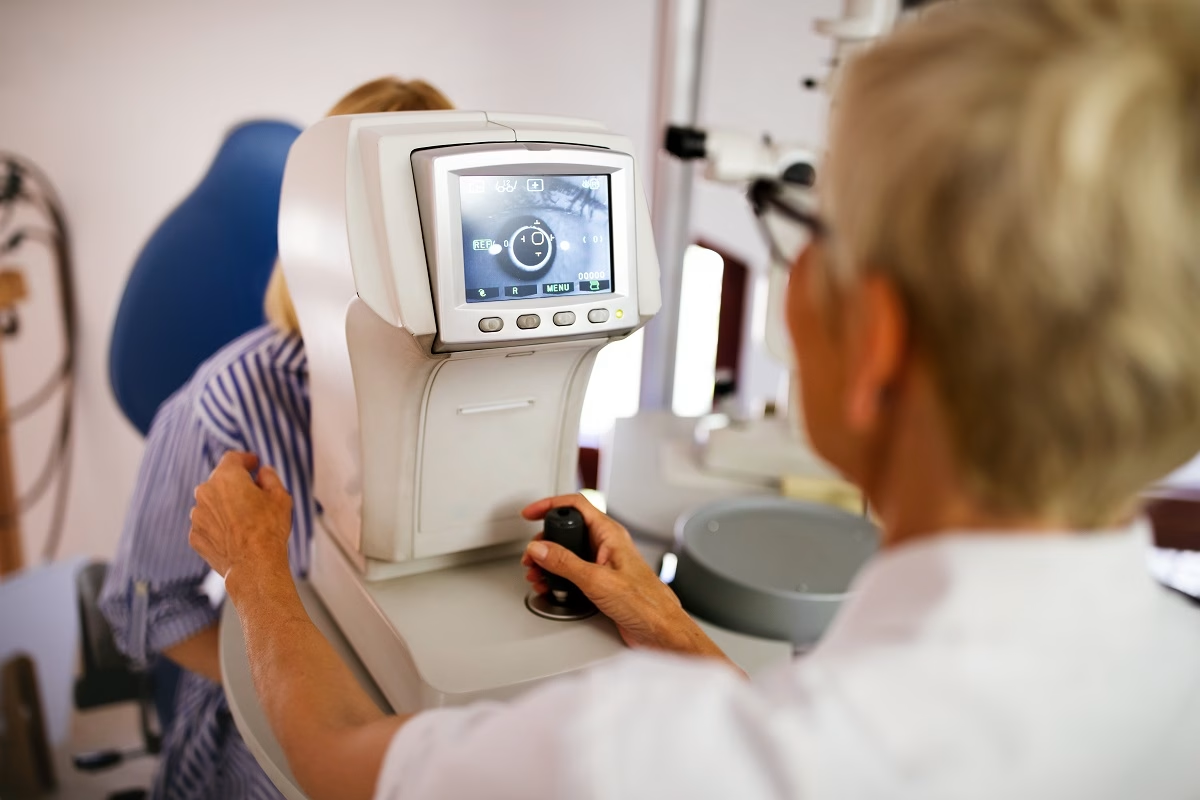
Usually, physicians begin the diagnosis of ocular hypertension with an eye examination to check for abnormalities linked to the disease. They may also perform some tests to rule out disorders with similar symptoms. For example:
- Gonioscopy – This test is used to check whether the eye’s drainage system is working correctly. During this procedure, doctors will use a special lens and a type of microscope known as a slit lamp.
- Pachymetry – It is used to measure the thickness of the cornea.
- Tonometry – It helps measure the inner eye pressure.
- Visual field test – During this test, doctors will check your field of vision.
- Optical coherence tomography – This is a specific test that helps your doctor check the optic nerve function.
Treatment
Sometimes, doctors prescribe eye drops and continue to monitor your intraocular pressure at regular eye examinations. However, once you are diagnosed with this disorder, you may get the following medicines. These include:
- Prostaglandins – These are eye drops that help increase the amount of fluid that leaves the eye.
- Beta-blockers – Sometimes, doctors may recommend eye drops from this category to reduce the eye fluid production.
- Alpha-adrenergic agonists – This medicine is often used 2-3 times per day to reduce fluid output and increase fluid drainage.
- Carbonic anhydrase inhibitors – They help reduce fluid output.
- Rho kinase inhibitors – These medications are used once a day to reduce the production of fluid.
- Miotic or cholinergic agents – These medicines are usually prescribed by doctors to increase the outflow of fluid from the eyes.
The previous medications may cause some adverse reactions. For example, redness, irritation of the eyes, headaches, and others. People who do not respond to the previous medicines may need surgery to treat IOP.
Frequently Asked Questions
What is the difference between ocular hypertension and glaucoma?
These are different disorders, and glaucoma often occurs due to ocular hypertension. It happens when IOP causes damage to the optic nerve. Without treatment, glaucoma may cause permanent vision loss.
What is ocular hypertension caused by?
This disorder often occurs when the fluid in the eye builds up and blocks the drainage system of the eye. The risk of developing IOP increases if you have diabetes, poor lifestyle choices, eye trauma, or eye diseases (such as pigment dispersion syndrome).
What are the symptoms of high eye pressure?
While most people do not have symptoms, some of them may experience the following ones. These include blurred vision, halos around lights, tunnel vision, eye pain, redness, headaches, and an enlarged eyeball (in infants). If any of the previous symptoms occur, immediately contact your doctor. Ask your healthcare provider if you have additional questions.