
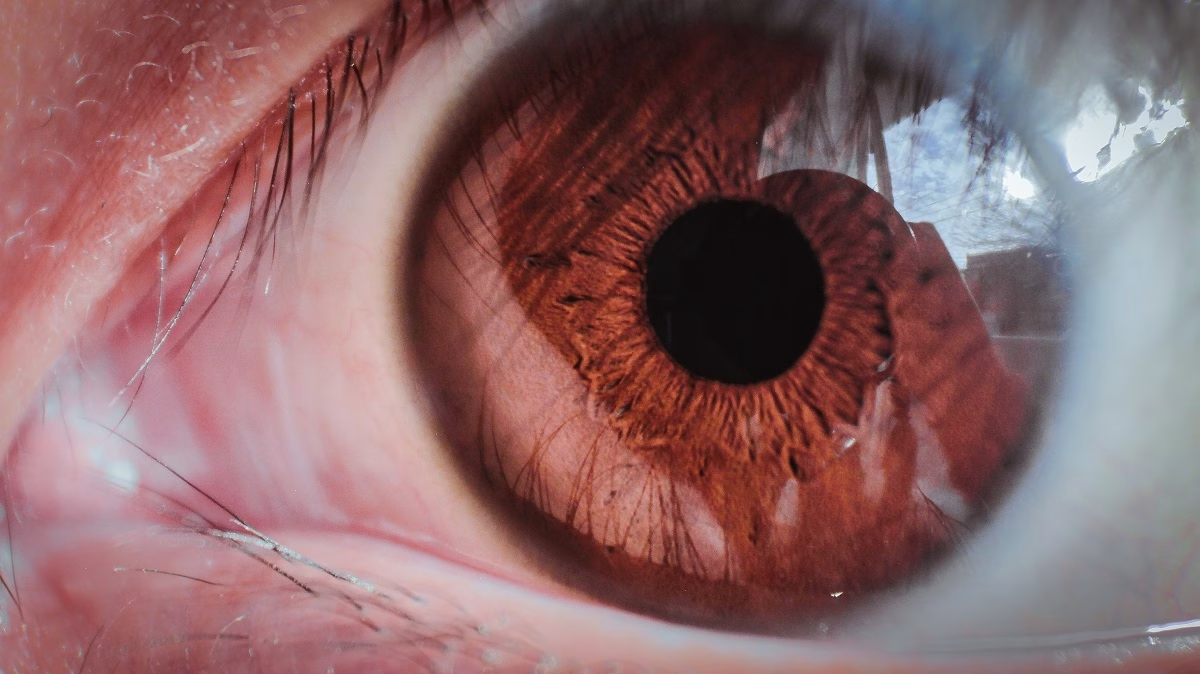
A health condition in which a person experiences fast and uncontrollable eye movements is called nystagmus. Symptoms may occur when your eyes move up or down, side to side, or in a circular motion. Some people are born with this condition (congenital nystagmus), but it may be acquired later in life (acquired nystagmus). Usually, doctors recommend contact lenses, glasses, medicines, or surgery to treat this condition.
Furthermore, the uncontrollable movements can follow different patterns. For example:
- Drift in one direction and then jerk to the opposite direction (jerk nystagmus)
- Drift back and then forth in a steady or pendulum-like motion (pendular nystagmus)
Sometimes, nystagmus may also cause problems with vision, depth perception, and balance or coordination.
Types of Nystagmus
Doctors have divided this condition into two categories: congenital or infantile (in such cases, the condition is present at birth or appears in the first months of life) and acquired (onset after 6 months of age).
Congenital Nystagmus
This type of nystagmus is often present at birth, and symptoms begin to appear between 6 weeks and 3 months of age. While this condition may be passed from the biological parents, the exact cause of congenital nystagmus is not fully understood. Most of the time, nystagmus in children negatively affects both eyes. The primary symptom of congenital nystagmus is blurry vision.
Acquired Nystagmus
In such cases, people develop nystagmus later in life, and it is more common in adults. Sometimes, nystagmus can be a symptom of another health condition that negatively affects your brain, eyes, or ears. Rarely, people may develop nystagmus due to the misuse of alcohol or recreational drugs. Typically, people with nystagmus describe their vision as unstable or shaky. In addition, there is a form of nystagmus that negatively affects children. It is called spasmus nutans, and it is often diagnosed between 6 months and 3 years old, but the condition often improves without treatment between the ages of 2 and 8.
How Common is Nystagmus?
In general, it is difficult to estimate how many people have nystagmus. Previously, studies have reported that anywhere from 6 to 24 people out of every 10,000 have this condition.
Symptoms
One of the primary symptoms of nystagmus is uncontrollable movement in the eyes. However, it may also cause other symptoms. These include:
- Balance problems
- Oscillopsia (feeling as if your surroundings are moving)
- Blurred vision
- Vertigo (dizziness)
- Increased sensitivity to light
- Difficulty seeing in the dark
If you or your child experiences any of the previous symptoms, immediately contact your healthcare professional.
Causes and Risk Factors
Normally, the brain controls eye movement in conjunction with the structures in the ear known as the vestibular system. Therefore, it automatically adjusts your eyes when you move your head, which helps keep the image you see in focus. However, in people with nystagmus, there is a problem that prevents the brain and vestibular system from controlling the eyes. Furthermore, nystagmus may indicate another health problem. That’s why you should visit a doctor if you have nystagmus symptoms.
While anyone may develop this condition, physicians have identified some factors that could elevate your risk of developing it. Examples include:
- Development problems with the brain or eye
- Inner ear disorders, including benign paroxysmal positional vertigo (BPPV) and Meniere’s disease
- Stroke
- Retina or optic nerve disorders
- Brain tumors
- Eye or head trauma
- Albinism (lack of pigmentation in the skin)
- Alcohol and drug use
- Vision problems, including astigmatism or nearsightedness
- Some medicines (such as antiseizure drugs)
- Conditions that negatively affect your central nervous system (such as multiple sclerosis)
- Eye problems, including strabismus (crossed eyes), focusing problems, cataracts, and others
Unfortunately, there is no way to prevent this condition. That’s why the treatment goal is to relieve the symptoms and treat the underlying cause.
Diagnosis
Usually, people with nystagmus are referred to an ophthalmologist. They often perform an eye examination and may ask some questions about your symptoms and medical history. During this examination, ophthalmologists will check for abnormalities linked to the disease, including strabismus, cataracts, or problems with the retina or optic nerve. However, nystagmus is often diagnosed by different healthcare professionals because it depends on the underlying cause. For instance, if you develop nystagmus due to brain problems, the condition will be confirmed by a neurologist. Check below some tests often used by doctors to confirm or rule out nystagmus:
- Neurological, eye, or ear examination
- Eye movement recordings (such as video-nystagmography or electronystagmography)
- Imaging tests – The following tests are often used to get detailed images of the brain and surrounding tissues. For example, CT (computed tomography) scans or MRI (magnetic resonance imaging) scans
- Genetic tests – To perform this test, doctors will take a sample of blood to check for the abnormal genes linked to the disease. Doctors often perform this test in people with congenital nystagmus.

Treatment
Doctors often recommend different treatments for people with nystagmus because they depend on some factors. These include the type and underlying cause of the disease, the severity of the symptoms, existing health conditions, gender, and age. Check below some treatments often recommended by doctors for people with nystagmus:
- Glasses or contact lenses – This treatment option may help reduce the symptoms of nystagmus. In general, clearer vision frequently slows the fast eye movement. Sometimes, people need prism lenses that limit how much their eyes must move.
- Medicines – Doctors often recommend the following medicines for adults with nystagmus to relieve the symptoms. For example, Gabapentin, Baclofen, or Onabotulinumtoxin A (Botox).
- Eye muscle surgery – In rare cases, doctors may recommend this treatment for people with strabismus. During this procedure, surgeons will change the position of the muscles that move the eyes. While it cannot cure nystagmus, it often improves eye movement.
- Vision correction surgery – Doctors often recommend LASIK for people with nystagmus and nearsightedness. It helps improve your vision and slow eye movement.
Frequently Asked Questions
Is nystagmus a serious condition?
In general, this condition is not dangerous, but it can be associated with serious diseases that negatively affect your brain (such as brain tumors, stroke, toxicity, head trauma, and inflammatory diseases).
Can nystagmus be corrected?
Usually, the correction of nystagmus depends on the underlying condition. Rarely, treating the underlying condition can correct acquired nystagmus. For instance, you develop this condition due to an inner ear disorder. With treatment, you can get rid of nystagmus symptoms.
What can I expect if I have nystagmus?
Usually, people with nystagmus have difficulty performing their daily tasks. In some cases, it may also limit the types of jobs and hobbies you can have. Unfortunately, nystagmus rarely goes away completely, but it can improve over time. If you have additional questions, ask your healthcare provider.