
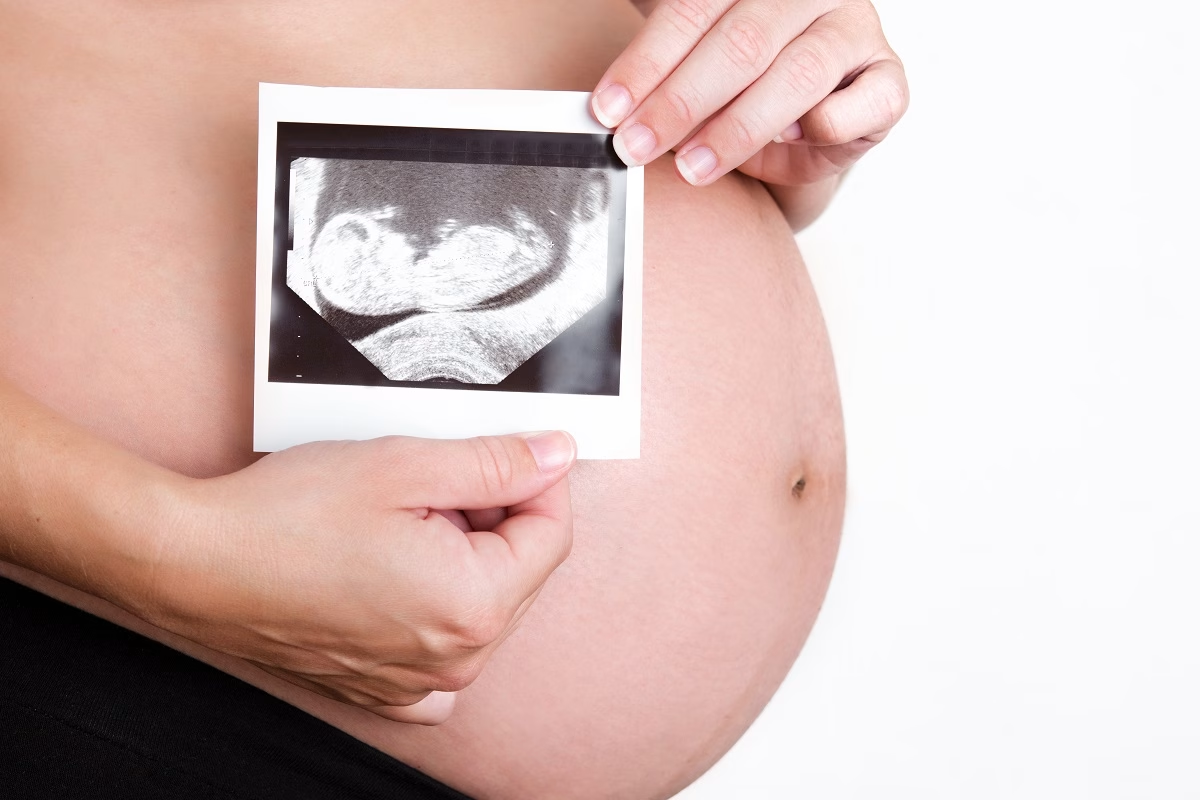
The medical term used to describe a condition in which the placenta does not form properly, and it is caused by problems that happen when sperm fertilize an egg, is called a molar pregnancy. In normal circumstances, the placenta forms to nourish the growing embryo. Fortunately, people get treatment and go on to have healthy future pregnancies.
In other words, a molar pregnancy is a condition in which the sperm joins improperly to an egg at fertilization, which makes a benign (noncancerous) tumor. It often looks like a fluid-filled sac, which is very similar to a cluster of grapes. Furthermore, this benign tumor cannot support a developing embryo, and it often ends the pregnancy. In rare cases, a molar pregnancy may also cause a miscarriage. Usually, those who develop a molar pregnancy need surgery to treat it. Otherwise, it may lead to serious complications.
In addition, molar pregnancies are a type of gestational trophoblastic disease (GTD). Generally, GTD is a group of disorders that cause tumors to grow in the uterus. Sometimes, molar pregnancies are called hydatidiform moles.
This condition affects about 1% of all pregnant women (about 1 in 1,000).
Types of Molar Pregnancy
Physicians have divided this condition into 2 types. These include:
- Complete Molar Pregnancy – In this case, the embryo does not form because the sperm fertilizes an empty egg. As a result, the embryo cannot grow. It also causes abnormal placental growth that contains fluid-filled cysts or tumors. Therefore, these abnormal growths begin to produce the pregnancy hormone HCG (human chorionic gonadotropin). However, HCG is also produced by a healthy placenta during pregnancy, which makes you feel like you are pregnant and gives you a positive pregnancy test.
- Partial molar pregnancy – This type of molar pregnancy happens when the abnormal placenta forms along with an embryo, and 2 sperm fertilize an egg. Thus, there is an additional set of chromosomes in the growing embryo. Most of the time, this embryo does not survive.
Symptoms
While some people do not have any symptoms, others may experience the following ones. Check the most common symptoms of molar pregnancy below:
- Severe nausea and vomiting
- Preeclampsia (very high blood pressure)
- Swelling in the abdomen
- High levels of HCG in the blood
- Anemia (low red blood cell count)
- Cysts that come out of the vagina
- Vaginal bleeding (especially within the first 3 months of pregnancy)
Do not take any medications and visit a doctor if any of the previous symptoms occur because they resemble other health conditions.
Causes and Risk Factors
According to some research, molar pregnancies are caused by genetic errors that happen during the fertilization of an egg by a sperm. Normally, the embryo gets one set of chromosomes from each biological parent for a total set of 46 chromosomes. These are specific structures that contain genes. However, in molar pregnancies, there is an imbalance of chromosomes (such as a complete molar pregnancy where there are no chromosomes). However, in the partial molar pregnancy, the egg is fertilized by two sperm, which causes an embryo to have 69 chromosomes. In most cases, this condition causes an unsuccessful pregnancy.
Healthcare professionals have also identified some factors that could increase your risk of developing a molar pregnancy. Check some of them below:
- Age – The pregnancy occurs in women younger than 20 years old or older than 40 years old.
- A personal history of molar pregnancies – The risk of getting a molar pregnancy increases if you have even had one.
- Miscarriage – Females who have had two or more miscarriages are also at increased risk for molar pregnancies.
- The risk of developing molar pregnancy also increases in Asian descent.
What Are The Long-term Effects Associated with Molar Pregnancy?
Sometimes, people with molar pregnancies may also experience complications, especially if they do not get treatment. Check some examples below:
- Invasive mole – In some cases, certain parts of the molar pregnancy remain in the uterus after surgery or miscarriage. Hence, the abnormal cells that remain begin to grow into the muscle layer around the uterus, causing invasive moles. However, this complication occurs rarely and affects less than 15% of people with molar pregnancies.
- Choriocarcinoma – This complication occurs very rarely, and it is a type of cancer that grows within the uterus and may spread to other parts of the body.
- Sepsis (infection of the blood)
- Uterine infection
- Preeclampsia
- Shock (a sudden drop in blood pressure)
- Hemorrhage (severe bleeding)
- Hyperthyroidism (overactive thyroid gland)
- Hyperemesis gravidarum – This is a severe and uncontrollable nausea and vomiting that often occurs due to high HCG levels.
- Ovarian cysts
- Pulmonary embolism
The previous list does not contain all possible complications of molar pregnancy. In any case, you can talk with your doctor about ways to reduce the risk or prevent them. In addition, there is no way to prevent molar pregnancies. However, you can avoid another pregnancy for at least one year to reduce the risk of complications.
Diagnosis
This condition is often diagnosed in the first trimester of pregnancy during an ultrasound. This is an imaging test that helps doctors identify fluid-filled sacs instead of a placenta. While there is no embryo or fetus in the uterus, the pregnancy tissue may remain.
Doctors may also perform some blood tests to check HCG levels in the blood and whether your placenta is healthy. The level of this hormone can also be measured at home through a urine test. Mostly, people with molar pregnancies have high levels of the HCG hormone.

Treatment
While the primary treatment for people with a molar pregnancy is surgery, doctors may also recommend other options. Check some of them below:
- Surgery – During this procedure, surgeons will remove the abnormal tissue from the body to prevent life-threatening complications.
- Dilation and curettage (D&C) – This treatment is often performed under general anesthesia. It also helps remove all abnormal tissue from the uterus.
- Hysterectomy – This type of surgery is rarely used in people with a molar pregnancy. It involves the removal of the uterus.
Sometimes, doctors may prescribe some medicines instead of surgery to remove the contents of the uterus. Furthermore, after treatment, doctors will monitor your HCG levels until they return to normal.
Frequently Asked Questions
Can a molar pregnancy lead to a normal pregnancy?
Unfortunately, this condition results in the loss of the pregnancy. For more details, discuss it with your doctor.
Does a molar pregnancy cause infertility?
No, but without treatment, it may lead to serious complications. You should also avoid becoming pregnant for at least 3 months due to an increased risk of complications and high levels of HCG.
Is a molar pregnancy a type of miscarriage?
Yes, and it often results in pregnancy loss. Moreover, it is normal to be disappointed and sad that you are not pregnant, but you can participate in support groups or talk with family and friends to cope with negative thoughts. Ask your healthcare provider if you have any other questions.