

A health condition that causes the frontal bones in the baby’s skull to close too early is called metopic craniosynostosis (also known as trigonocephaly). As a result, the forehead grows in the shape of a triangle. Most babies with trigonocephaly need surgery to reshape their skull and reduce symptoms. In some cases, doctors may recommend wearing a helmet to reshape the skull of your child.
In general, this condition is a birth defect that happens when the 2 frontal bones in the baby’s skull fuse too early. It develops during pregnancy, but occurs shortly after birth. In normal circumstances, the human skull has several bones that fit together with sutures in between them. These sutures help the skull fit together with the growing brain. In some cases, these bones and sutures fuse together before the brain finishes growing. This process is known as craniosynostosis.
According to some studies, metopic craniosynostosis is the second most common type of craniosynostosis. However, the exact number of people who develop it is difficult to estimate, but some studies have shown that this condition affects about 1 in 700 to 1 in 15,000 newborns in the U.S.
Symptoms
Those who develop metopic craniosynostosis often experience the following symptoms. These include:
- Vision problems
- Intracranial pressure (pressure within the baby’s skull and brain)
- Abnormal skull bone growth, which affects the appearance of the head and face
- Developmental delays
Check below also some distinctive features of metopic craniosynostosis:
- The eyes are close together
- Narrow, bony, and pointed forehead
- Wide back of the head
- Arched or raised eyebrows
- Small or absent fontanelle
If any of the previous symptoms occur in your child, immediately contact your healthcare professional. In more severe cases, this condition may cause damage to the brain and its surrounding tissue.
Causes and Risk Factors
This condition occurs due to the early closing of the frontal bones of the skull before the brain finishes growing. This process is also known as premature fusion. Nowadays, healthcare professionals do not fully understand what exactly causes this condition, but some research suggests that the following factors could play a role. These include:
- Genetic mutations – Usually, babies with metopic craniosynostosis have a mutation in their FREM1 and SMAD6 genes.
- Adverse reaction to medicines during pregnancy – If you administer Valproic acid or Clomiphene citrate during pregnancy, your baby is at higher risk of developing metopic craniosynostosis.
- Thyroid disease
- The position of the baby in the uterus
- Underlying genetic disorders – Sometimes, the baby develops metopic craniosynostosis due to a genetic disorder called Williams syndrome.
Healthcare professionals have also identified some factors that may increase your risk of having children with metopic craniosynostosis. Check some of them below:
In any case, if you want to know more about the risks of having children with birth defects (including metopic craniosynostosis), you can discuss with your healthcare professional or ask for preconception counseling.
What Are The Possible Complications of Metopic Craniosynostosis?
Without immediate treatment, metopic craniosynostosis significantly increases the risk of serious complications. Check some of them below:
- Neurological and cognitive problems – These include neurodevelopmental delays, including speech, language, and motor skill difficulties. If the surgery to repair the baby’s skull is done too late, it may also lead to cognitive, behavioral, and learning problems even after surgery.
- IPC (increased intracranial pressure) – It may lead to severe headaches, vomiting, and brain damage.
- Vision changes – Vision problems often occur due to increased pressure on the brain, which often leads to vision impairment. However, if the condition is left untreated, it may lead to a complete loss of vision (blindness).
- Physical deformity – This complication often causes the forehead to become pointed and triangular (also known as trigonocephaly).
- Seizures
- Syndromic associations – In some cases, metopic craniosynostosis is associated with certain genetic syndromes (such as Muenke syndrome) that often bring additional developmental or physical complications.
- Treatment complications – These include the need for multiple surgeries, fluid buildup, wound infection, dural tears, and others.
While this document does not contain a complete list of complications, you can consult with your physician about ways to reduce the risk or even prevent the previous complications. Furthermore, it is not possible to prevent this condition, but doctors may recommend some tips to reduce the risk of birth defects (such as staying healthy during pregnancy).
Diagnosis
In some cases, doctors suspect metopic craniosynostosis during a prenatal ultrasound. However, the condition is often confirmed after birth. It often occurs during a physical examination after birth, in which doctors will look at the baby’s head from the top center (vertex) toward him/her face. Moreover, the shape of your baby’s skull may also indicate metopic craniosynostosis.
Physicians may also perform some imaging tests to gather more information about the shape of the skull bones. For example, X-rays, CT (computed tomography) scans, or MRI (magnetic resonance imaging) scans.
Treatment
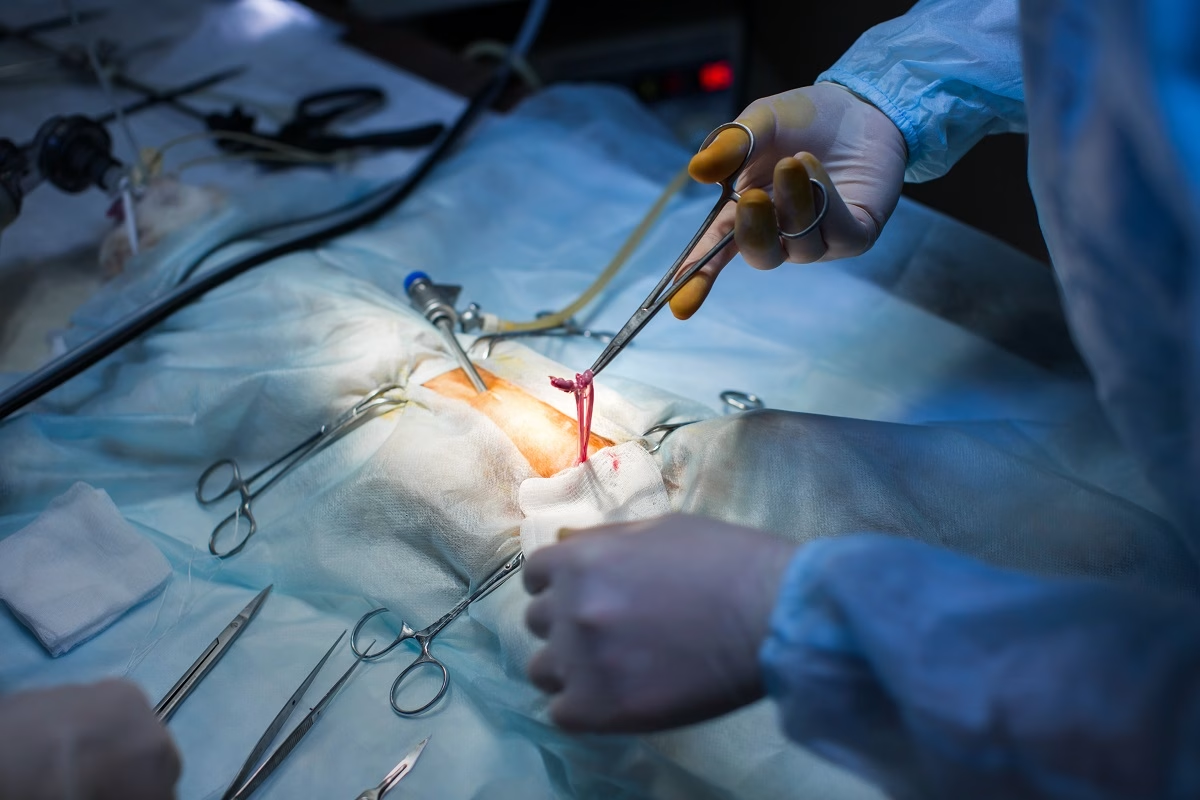
While mild forms of metopic craniosynostosis do not cause significant deformity and often do not need treatment, in moderate or severe cases, babies need treatment to reshape their skull, which allows more space for the brain to grow. Check below some types of surgery often recommended by doctors for babies with metopic craniosynostosis:
- Endoscopic-assisted surgery – During this procedure, surgeons will make a small cut (incision) in the child’s forehead (near the hairline). It also involves an endoscope that helps remove a strip of bone over the metopic suture (the skull part that fuses together too soon). Ideally, this surgery should be performed when your child turns 4 months old, but no later than 6 months.
- Open surgery (cranial vault remodeling) – In such cases, the surgery is performed between 6 and 12 months of age, and it involves a neurosurgeon and a plastic surgeon. During this treatment, they will make a large incision in the child’s scalp to remove the abnormally shaped parts of the skull. Therefore, they will cut, modify, and replace the skull bones to make an expected head shape.
In addition, there are some adverse reactions that may occur after surgery. These include infections, bleeding, hematoma (brain bleed), and others.
Frequently Asked Questions
What is the severity of metopic craniosynostosis?
This condition, as many other vary in severity and is specific to the angle of bone growth from the skull fusing. For instance, people with a mild form of metopic craniosynostosis often have minor changes to their forehead shape, but if your child develops a severe form of this condition, it often leads to a triangular or conical shape of the head.
Does my child need to wear a helmet after metopic craniosynostosis surgery?
Commonly, physicians recommend wearing a helmet until they are about 12 months old and after surgery. It helps the child’s skull grow into a round shape. However, if your child needs an open surgery, the helmet is often not needed. For more details, discuss it with your physician.
How long does it take to recover from surgery?
While you can notice improvements within a few weeks after surgery, a complete recovery often occurs after 2-3 months. Moreover, the bone regrowth and healing may continue over the next year. If you have any other questions, ask your healthcare provider.