
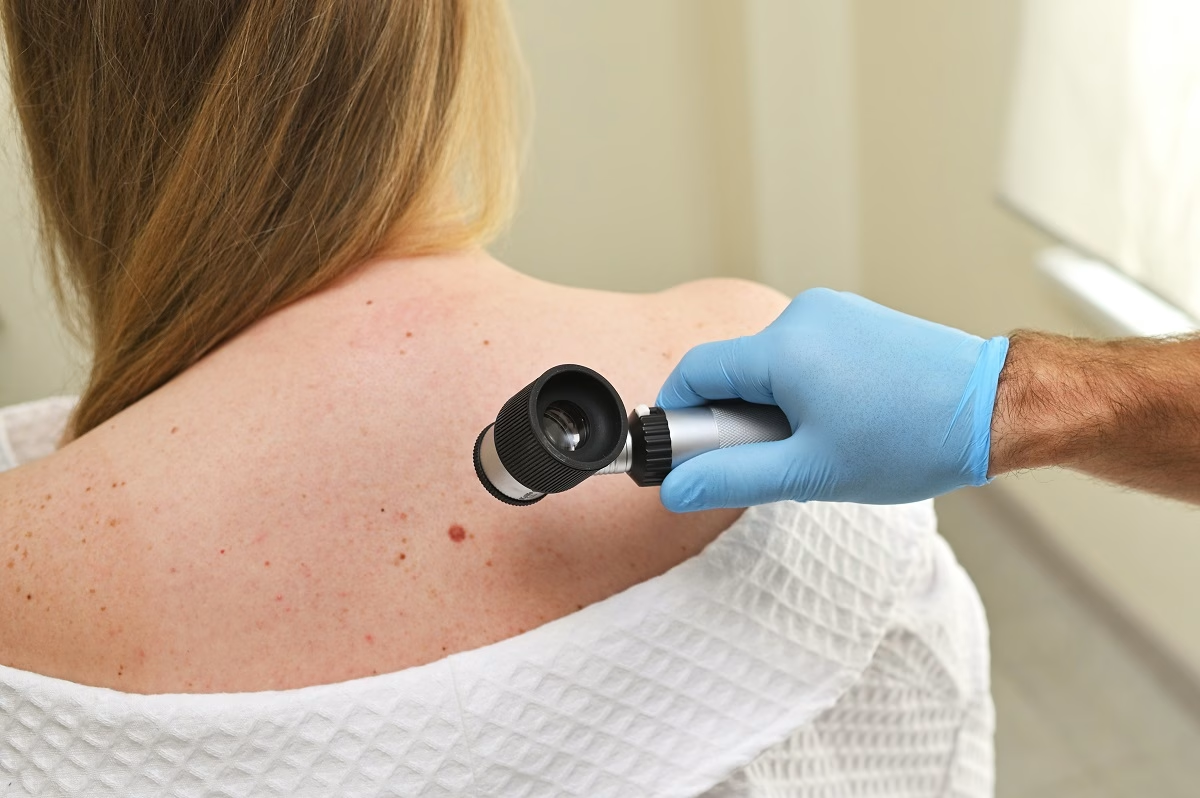
One of the most invasive skin cancers that has the highest risk of death is called melanoma. Nonetheless, it is one of the most serious skin cancers; it is still highly curable, especially in the early stages. You should see a doctor immediately if you have fair skin, blonde or red hair, and blue eyes.
In other words, melanoma is a type of serious skin cancer (also known as “black tumor”), and it often grows quickly and may spread to other structures and organs in the body. It often happens due to skin cells called melanocytes. In normal circumstances, these cells produce melanin, the dark pigments that give skin its color. Most of the time, melanomas are black or brown in color, but in rare cases, they can be red, purple, or skin-colored.
Moreover, approximately 30% of melanomas start in existing moles, but the rest begin to develop in normal skin. That’s why it is very important to pay attention to changes in the skin. However, the number of moles you have on the skin may sometimes predict the risk for melanoma. In general, knowing your risk of developing melanoma significantly increases the chances of curing it. For instance, in the early stages, there is 99% cure rate.
How Common is Melanoma?
While melanoma accounts for only 1% of all skin cancers, it causes the majority of cancer-related deaths. Furthermore, it is one of the most common cancers in people under 30 years old (especially in young women). Generally, melanoma cases have dramatically increased over the past 30 years, and it is widely accepted that increasing levels occur due to UV exposure.
What Are The Signs of Melanoma?
One of the important parts in detecting melanoma is knowing how to spot it because, in the early stages, it is highly treatable. This type of skin cancer may appear as moles, scaly patches, open sores, or raised bumps. Moreover, you can use the American Academy of Dermatology’s “ABDCE” memory device to learn the warning signs of melanoma. These include:
- Asymmetry – The halves of the mole do not match
- Border – The edges are not smooth.
- Color – Usually, when melanoma occurs, the color is mottled and uneven, usually with shades of brown, back, gray, red, or white.
- Diameter – The spot is often greater than the tip of a pencil eraser (about 6 millimeters).
- Evolving – The spot is new or changing in size, shape, or color.
In any case, some melanomas do not fulfill the ABDCE rule. That’s why if you notice some skin changes, you should visit a doctor. Additionally, there is another tool that helps recognize melanoma, which is the ugly duckling sign. It means that a mole looks different from others. Thus, it is recommended to see a doctor for testing.
Causes
Almost all experts agree that the one major risk factor for melanoma is overexposure to sunlight, especially sunburns during the teen years. According to some statistics, 86% of melanomas are caused by UV (ultraviolet) rays. This type of cancer occurs, like many others, when specific cells develop DNA changes. In such cases, DNA changes (mutations) occur when UV exposure causes damage to the skin cell DNA. Thus, a mutated DNA gives the cells different instructions, which make them grow and multiply uncontrollably. When these abnormal cells become too numerous, they form a mass called a tumor.
In addition, healthcare professionals have identified some factors that may increase your risk of developing melanoma. One of the most significant risk factors is prolonged UV exposure that causes about 6,000 cases of melanoma per year in the U.S. Check below for other factors that may increase your risk of developing melanoma:
- A history of melanoma
- Family history – If you have a parent or sibling with melanoma, your risk of developing it significantly increases.
- Fair skin, freckles, blond or red hair, and blue eyes also may increase the risk.
- Using tanning beds for long periods
- Many moles (especially atypical moles)
- Weakened immune system – There are some medicines (such as immunosuppressants) and health conditions (such as cancer or HIV infection) that may weaken your immune system.
- Living or traveling to locations near the equator or in high elevations
- Race – Melanoma mostly affects white people, but it may also occur in other races.
What Are The Long-term Effects of Melanoma?
People with melanoma may also experience some complications. Check some of them below:
- Neurological problems – For example, severe headaches, personality changes, seizures, and others.
- General physical decline (including weight loss, fatigue, anemia, and others)
- Spinal cord compression – When melanoma spreads to the bones, it may lead to paralysis or severe pain, which is considered a medical emergency.
- Eye complications – One example is ocular melanoma, which, without immediate treatment, may lead to permanent loss of vision (blindness) or retinal detachment.
- Organ dysfunction – If melanoma is left untreated, it may spread to the liver, lungs, brain, and other vital organs.
- Metastasis – This is the medical term used to describe a cancer that has spread to other structures or organs in the body.
The previous list does not contain all possible complications, but you can try to talk with your doctor about ways to reduce the risk of the previous ones.
How to Prevent Melanoma?
Check below some tips that doctors often recommend to reduce the risk of developing melanoma:
- Do not use tanning beds and avoid sun and seek shade (especially between 10 a.m. and 4 p.m.)
- Wear hats with brims, sunglasses, long-sleeved shirts, and pants when outdoors
- It is also recommended to use a broad-spectrum sunscreen with a skin protection factor (SPF) of at least 30. You should apply it to the skin every 1.5 hours or often if you are swimming or sweating.
- Lip balms with sunscreen
Dietary Changes
According to the American Cancer Society, eating a plant-based diet over an animal-based diet may help avoid all cancers. Generally, there is no doubt that a healthy diet can help your immune system function better. One study has shown that the Mediterranean diet is a healthy choice that helps reduce the risk of developing cancer. Check below also some immune-system healthy foods:
- Daily tea drinking – For instance, the polyphenols (antioxidants found in plants) help strengthen the immune system. Moreover, green teas contain more polyphenols than black teas.
- High vegetable consumption – These include carrots, cruciferous, and leafy vegetables.
- Weekly fish intake – There is a study where people who ate fish weekly seemed to avoid developing the disease compared to people who did not eat fish.
Diagnosis
If you notice a mole that looks suspicious, it is recommended to see a doctor. To determine whether cancerous, doctors often perform a biopsy. During this procedure, they will take a small sample of the mole for testing under a microscope. The pathologists will check for cancerous cells. Once you are diagnosed with melanoma, doctors may perform additional tests to determine the extent (stage) of the cancer. Check below some tests often used by doctors to stage melanoma:
- Sentinel lymph node biopsy – Doctors often perform this test in people with melanomas deeper than 0.8 millimeters (mm) and who have ulceration under the microscope in the tumor. It helps determine whether the cancer has spread.
- CT (computerized tomography) scan – This is an imaging test used to get cross-sectional images of different structures in the body. In such cases, it helps determine if melanoma is present in the internal organs.
- MRI (magnetic resonance imaging) scan – This is another imaging test used to get detailed images of the brain and spinal cord, where melanoma can spread.
- PET (positron emission tomography) scan – Doctors often perform PET scans to check if the cancer has spread to the lymph nodes or other distant parts of the body.
- Blood tests – These tests are often done to measure lactate dehydrogenase (LDH) before treatment.
Treatment
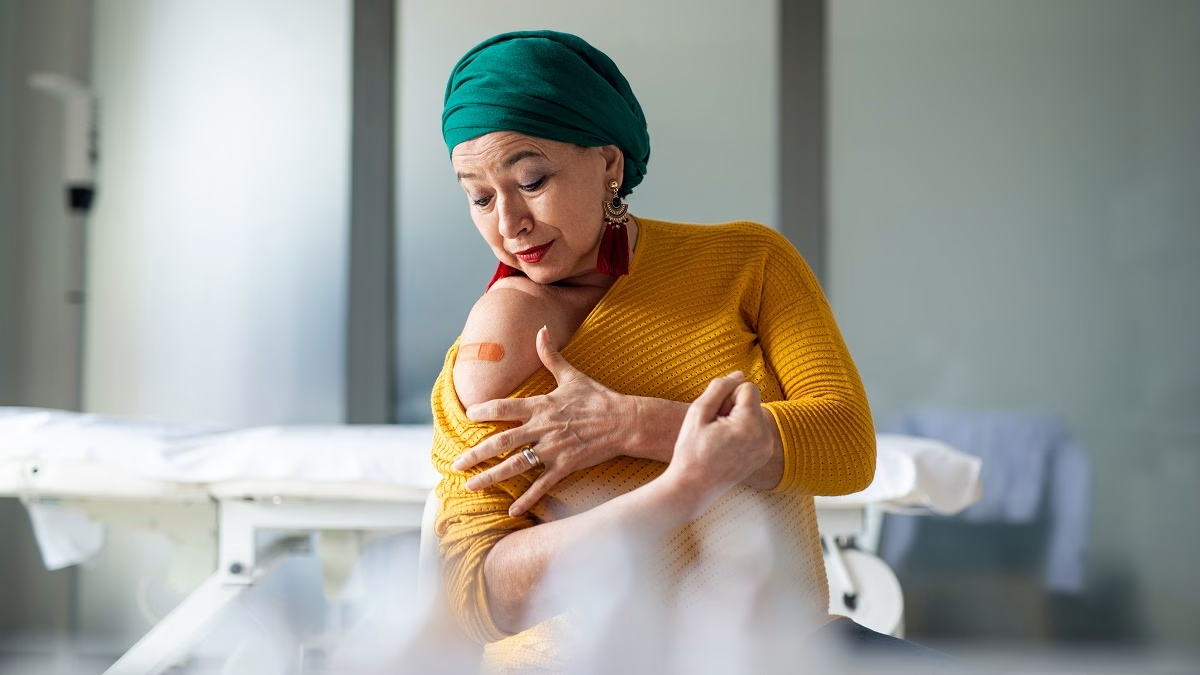
Physicians usually prescribe different treatments for people with melanoma because they depend on several factors. For example, the size, location, and stage of the tumor, overall health, age, gender, and preferences. In mild cases, surgery to remove the tumor may be the only treatment needed. Check below for other treatment options often recommended by doctors for people with melanoma:
- Lymphadenectomy – This treatment is recommended by doctors when melanoma has spread. During this procedure, surgeons will remove the lymph nodes and some healthy tissue that surrounds them. It often helps prevent the spread of the cancer to other parts of the body.
- Metastasectomy – This surgery is used to remove small melanoma bits from internal organs.
- Targeted therapy – This treatment involves specific medicines that block a protein in the cancer cells, causing them to die.
- Radiation therapy – This therapy uses powerful energy beams to destroy cancer cells. Usually, the energy used in this treatment comes from X-rays or protons, but it may also come from other sources.
- Immunotherapy – Doctors may prescribe this treatment when the previous options do not work to boost the immune system to find and destroy cancer cells. However, immunotherapy is not an option for everyone who develops melanoma.
Frequently Asked Questions
Where can I get melanoma on my body?
While melanoma can appear anywhere on the body (including the eyes and internal organs), it usually develops on the upper back in men and on the legs in women. For more details, discuss it with your doctor.
What is the outlook for people with melanoma?
If the cancer is found in the early stages, it is often curable. In more advanced stages, melanoma is often fatal. That’s why you should see a dermatologist if you notice any suspicious skin changes.
Is melanoma a serious cancer?
This is an aggressive form of skin cancer that often grows quickly and easily spreads to other parts of the body. The only way to cure it is early detection and proper treatment. Ask your healthcare provider if you have any other questions.