

An infection that often spreads from the middle ear to a part of the temporal bone (the large bone behind the ear) is called mastoiditis. Usually, those who develop it experience ear pain, drainage, and problems with hearing. Doctors often treat it with antibiotics and by draining excess fluid from the middle ear. In more severe cases, doctors may recommend surgery to treat mastoiditis.
In other words, mastoiditis is a bacterial infection that negatively affects the bone behind the ear. Previously, this infection was a common cause of death. However, today there are available vaccines that prevent infections and antibiotics that cure them.
While this infection occurs rarely, it may still occur due to a middle ear infection.
Types of Mastoiditis
Physicians have divided this infection into 2 types. For example:
- Acute mastoiditis – In such cases, the symptoms appear quickly. However, the treatment may last up to one month, and the infection usually does not return.
- Chronic mastoiditis – This type of mastoiditis is associated with an ear infection that lasts for at least one month.
Symptoms
Commonly, people begin to experience mastoiditis symptoms days or weeks after a middle ear infection. Check some examples below:
- Swollen skin or redness behind the affected ear
- Soft-feeling bone behind the ear
- Hearing loss
- Headaches
- Vertigo
- Confusion
- Double vision
- The affected area looks like it sticks out more than the side of the other ear
- Ear drainage (sometimes may contain pus)
- Throbbing ear pain that does not disappear
Moreover, children before the age of 2 may also pull the affected ear and be fussy or less active, along with the symptoms listed above. In any case, if you or your child experiences any of the previous symptoms, do not hesitate to visit a doctor for diagnosis and treatment.
Causes
While most people develop mastoiditis due to an untreated middle ear infection that allows the infection to spread to the temporal bone, it may also occur due to other causes. For instance, some people can develop this infection due to a condition called cholesteatoma without having a middle ear infection. This condition causes abnormal skin growth in the middle ear. As a result, it blocks fluids that should drain from the middle ear and cause mastoiditis. Healthcare professionals have also identified some factors that may increase your risk of developing it. Examples include:
- Age – Children under the age of 6 (especially under 2 years old) are more prone to mastoiditis due to anatomical differences (such as shorter eustachian tubes).
- Recurrent or untreated ear infections – One of the most significant factors is an acute otitis media that is left untreated.
- Weakened immune system – There are some health conditions (such as cancer or HIV infection) and medicines (such as immunosuppressants) that may weaken your immune system. As a result, the risk of developing mastoiditis as well as other infections significantly increases.
- Chronic ear disease – These include chronic (long-term) otitis media, cholesteatoma, and others.
- Previous ear surgeries
What Are The Long-term Effects of Mastoiditis?
People who leave mastoiditis untreated may also experience some complications. Check some of them below:
- Partial or complete hearing loss (deafness)
- Facial paralysis
- Labyrinthitis (inner ear infection)
- Meningitis – This is a life-threatening infection that affects tissues that cover the brain. Without treatment, this infection is often fatal.
- Encephalitis (swelling in the brain)
- Sepsis – This is another life-threatening infection that causes inflammation throughout the body.
- Brain abscess (a pus-filled pocket in the brain)
- Sigmoid sinus thrombosis – In such cases, a blood clot blocks blood flow in the large vein draining the brain.
- Osteomyelitis (this is a bone infection that may spread to skull bones)
The previous list does not contain a complete list of mastoiditis complications. In any case, you can consult with your healthcare professional about ways to reduce the risk or even prevent them.
How to Prevent Mastoiditis?
One of the best ways to prevent mastoiditis is to treat ear infections as soon as possible. However, doctors may recommend some tips that can reduce the risk of developing infections. Examples include:
- Vaccines – In general, the U.S. Centers for Disease Control and Prevention (CDC) recommends that children up to age 2 receive a pneumococcal vaccine. It helps protect your child against the bacteria that often cause ear infections.
- Limit or avoid pacifier use – Using a pacifier for long periods may increase the risk of your child having middle ear infections.
- Stop smoking – Secondhand smoke also increases the risk of developing ear infections. It is also very important to avoid smoking around your child. If you have problems with smoking cessation, discuss it with your healthcare professional.
- Manage allergies – Sometimes, an allergic reaction can block the child’s eustachian tubes and cause inflammation.
- Prevent colds – Most of the time, ear infections begin with a cold. That’s why you should take precautions to prevent them.
Diagnosis
Commonly, the diagnosis of mastoiditis begins with an ear examination, in which doctors use an otoscope to examine the inside of the ear. Furthermore, to confirm or rule out mastoiditis, they often perform the following tests and procedures. Examples include:
- Blood tests – These tests are done to check for infections or inflammation.
- Ear culture – During this test, doctors will get a sample of fluid from the ear to check for bacteria.
- CT (computerized tomography) scan – This is an imaging test used to get cross-sectional images of the ear and surrounding tissue.
- MRI (magnetic resonance imaging) scan – This is another imaging test used to get detailed images of different structures in the body (including the ear, brain, and others).
Treatment
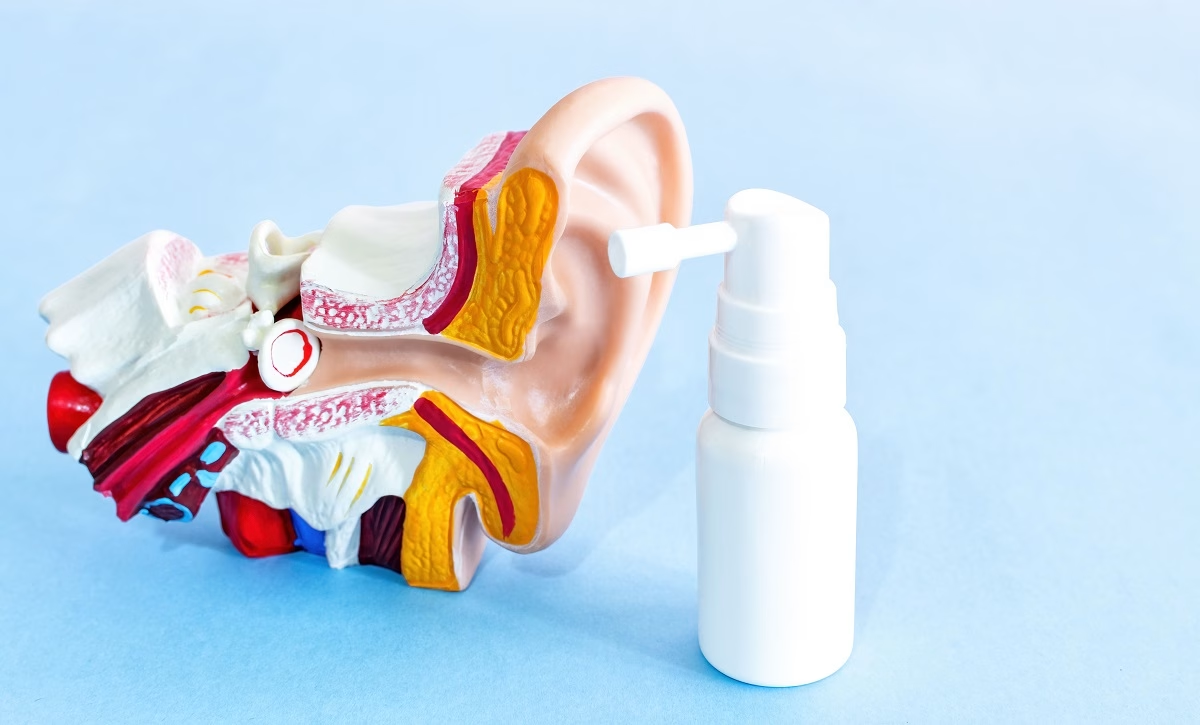
Most of the time, mastoiditis is treated with antibiotics and steroids. Doctors may also perform a myringotomy to drain excess fluid from the ear when it does not drain on its own. To perform this treatment, doctors will make a small hole in the eardrum, which allows the fluid to drain from the ear. They may also put small and hollow cylinders known as ear tubes into the hole to allow the fluid to drain while you are sleeping. Usually, these tubes fall out on their own within 6 to 12 months.
In more severe cases (such as abscesses), people need surgery (mastoidectomy) to remove the infected bone.
Frequently Asked Questions
When should I see my healthcare provider?
Usually, you should see a doctor if you or your child has symptoms of an ear infection (such as ear pain that does not go away on its own). Most ear infections are treatable, and to prevent mastoiditis, you should get treatment as soon as possible.
What can I expect if I have mastoiditis?
In most cases, people notice improvements within a few days after starting the treatment with antibiotics. Furthermore, it is very important to finish administering antibiotics exactly as recommended by your healthcare professional. Otherwise, the infection may return, and it becomes more difficult to treat.
How serious is mastoiditis?
In general, this is a serious infection of the mastoid bone (also called the temporal bone) that is located behind the ear. Without treatment, it may lead to serious complications (such as facial paralysis, permanent hearing loss, brain abscess, meningitis, and others). If you have any other questions, ask your healthcare provider.