
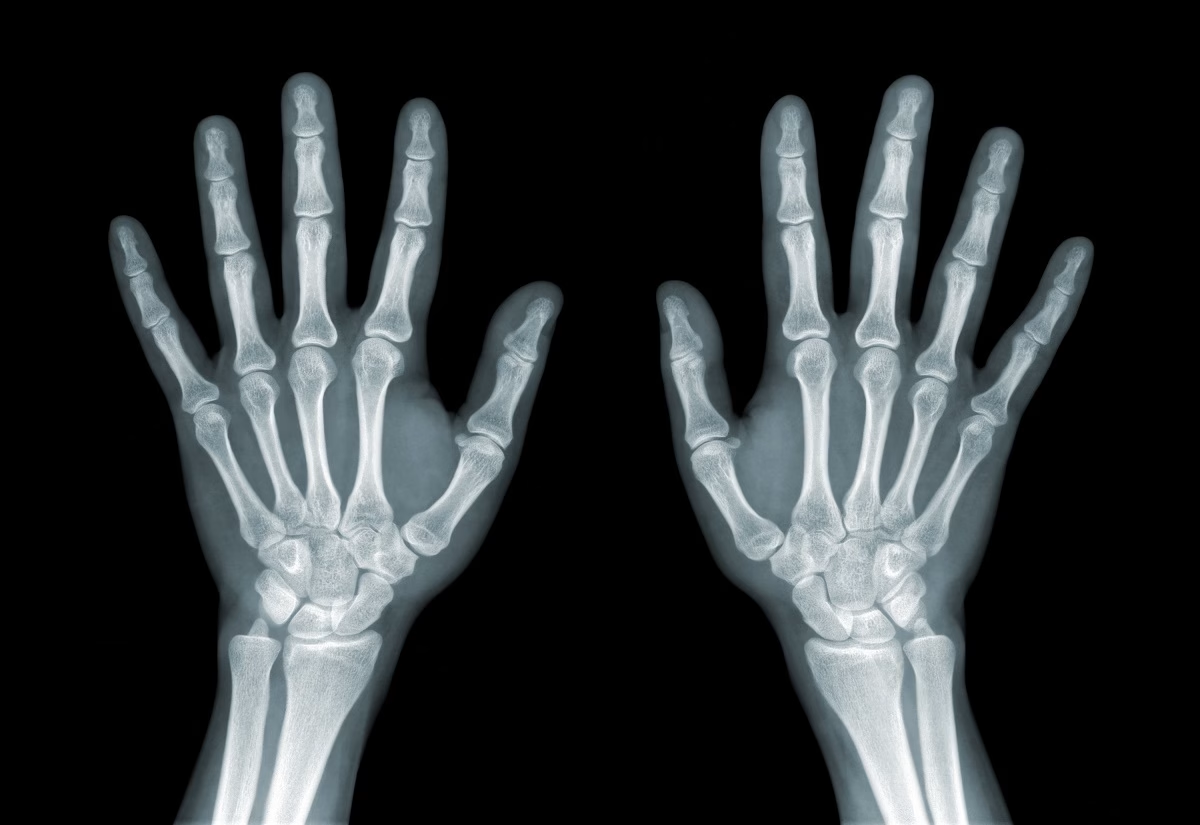
One of the most common types of broken bones is called metacarpal fractures. Generally, it is frustrating not to use your hand, but you should not rush your recovery. Putting too much stress on the bone before it has healed completely may increase your risk of re-fracturing or other complications.
In other words, metacarpal fractures are a type of bone fracture (also called broken bone) of the metacarpal bones. These are bones that connect your thumb and finger bones (the phalanges) to the wrist. You can feel the metacarpals by pressing on the back of the hand.
Typically, metacarpal fractures are common injuries that are caused by falling onto the hand or due to sports injuries. To treat these fractures, doctors often recommend wearing a splint or a cast while the bone heals. Sometimes, they may also recommend surgery.
In general, this type of bone fracture is very common, and it is the third most common fracture. Moreover, about 10% of all broken bones are metacarpal fractures.
Metacarpal Bones
In normal circumstances, each hand has 5 metacarpal bones that connect the wrist to the thumb and fingers. They are labeled as your first metacarpal through the fifth metacarpal. For example:
- First metacarpal – This is the bone that connects the wrist to the thumb.
- Second metacarpal – It connects the wrist to the index finger.
- Third metacarpal – The bone that links the wrist to the middle finger.
- Fourth metacarpal – This bone connects the wrist to the ring finger.
- Fifth metacarpal – It links the wrist to the pinkie finger.
Types of Metacarpal Fractures
Healthcare professionals have divided these fractures into several categories based on which bone was broken, the shape of the fracture, or how it happened. Check below some fractures classified by the shape or pattern of the break line:
- Transverse fracture
- Oblique fracture
- Spiral fracture
- Segmental fracture
- Comminuted fracture
- Buckle fracture
- Hairline fracture
Check below some types of fractures classified by how they happen:
- Compound fracture
- Stress fracture
- Avulsion fracture
Open and Closed Fractures
Doctors may also classify metacarpal fractures as either open or closed. For instance, if you have an open fracture, your bone breaks through the skin. Most of the time, open fractures take longer to heal and have an increased risk of infections and other serious complications (such as bleeding). However, closed fractures are still serious, but they do not push the bone through the skin.
Displaced Metacarpal Fractures
Your doctor may also use the words “displaced” or “nondisplaced” to describe your fracture. While a displaced fracture means that the pieces of your bone move so much that a gap forms around the fracture when the bone breaks, nondisplaced fractures are still broken bones, but the pieces were not moved far enough to be out of alignment. In most cases, people with displaced fractures require surgery to repair.
Metacarpal Fracture Locations and Anatomy
It is important to understand that any part of the metacarpal bones can be fractured. Check some parts of the metacarpals below:
- Base – This is the end of the metacarpal furthest away from the fingers that meet the wrist bones. Moreover, at the end of the base forms a joint where is connected the finger to your wrist.
- Shaft – It is the long middle of the metacarpals.
- Neck – It indicates the part that joins the shaft and head.
- Head – While the head is the end part of the metacarpal that links to the finger bones, the end of the head forms a joint with the finger bones.
Boxer’s Fractures
This type of fracture indicates a fracture in the neck of the metacarpal that connects to the pinkie finger (the fifth metacarpal). Furthermore, it is one of the most common metacarpal fractures, which makes up 1 in every 4 metacarpal fractures. In most cases, Boxer’s fractures are caused by punching or hitting something hard with a closed fist (such as punching a wall in frustration).
Bennett and Rolando Fractures
These fractures occur when the joint at the base of the thumb metacarpal is affected. Moreover, people with Bennett Rolando fractures need surgery most of the time.
Symptoms
People who experience metacarpal fractures can notice the following symptoms. Check some of them below:
- Swelling
- Pain
- Tenderness
- Bruising or discoloration
- Difficulty moving or using the hand
- An unusual deformity or bump on the body
Commonly, if you fracture a metacarpal, the nearby tissue can also be damaged. For example, the ligaments, tendons, and muscles. Do not hesitate to see a doctor if any of the previous symptoms occur. Otherwise, it may lead to unpleasant results.
Causes and Risk Factors
In general, there are multiple causes of metacarpal fractures. Check the most common ones below:
- Sports injuries
- Other traumas (such as car accidents)
- Injuries at work or on job sites
- Falls
Furthermore, doctors have identified some factors that could increase your risk of developing metacarpal fractures. Examples include:
- Enchondromas – These are certain noncancerous (benign) tumors that grow inside the bones and increase the risk of fractures.
- Age – People aged from 10 to 40 are more prone to metacarpal fractures. Furthermore, broken metacarpals are the most common hand injury in people between the ages of 18 and 34.
- Sex – While males are more prone to metacarpal fractures, women older than 50 are also at higher risk.
Osteoporosis
People who develop this condition are at higher risk of metacarpal fractures. This condition weakens your bones, which make the more prone to fractures. In most cases, people do not know they have this condition until after breaking a bone. In general, females older than 50 are at increased risk for osteoporosis. That’s why doctors recommend regular bone density screening.
What Are The Possible Complications of Metacarpal Fractures?
People who get metacarpal fractures may also experience some complications. These include:
- Malunion – This complication occurs when the broken bone does not line up correctly while it heals.
- Nonunion – In such cases, the bones do not grow back together.
- Bone infection (osteomyelitis) – This infection often occurs in people who have an open fracture, which allows bacteria to enter the body.
- Stiffness – Mostly, people with metacarpal fractures feel stiffness around their fractured bone. However, occupational therapy and home exercises may help manage this complication.
- Acute compartment syndrome (ACS) – This is a buildup of pressure in the muscles that can stop blood from getting to the tissue. Without immediate treatment, it may lead to permanent muscle and nerve damage.
This article does not contain a full list of complications, but you can talk with your physician about ways to reduce the risk or prevent them.
How to Prevent Metacarpal Fractures?
Physicians usually recommend the following tips to reduce the risk or prevent metacarpal fractures. For example:
- Always wear your seatbelt
- Get protective equipment for all physical activities and sports
- You should also make sure your home and workspace are free from clutter that may trip you or others
- Never stand on chairs, tables, or countertops to reach things at home
- Dietary changes and regular physical exercise to maintain good bone health
- Regular screenings for bone density, especially if you are older than 50
- Doctors may also recommend using a cane or walker if you have walking problems or an increased risk of falls
Diagnosis
Like many other health conditions, the diagnosis of a metacarpal fracture begins with a physical examination and questions about the symptoms and medical history. However, to confirm or rule out metacarpal fractures, doctors often perform the following imaging tests. Examples include:
- X-rays – This test is used to confirm any fractures and how damaged your bones are.
- CT (computed tomography) scans – This test helps make cross-sectional images of different structures and organs in the body.
- Bone density test – This test is sometimes called a DEXA or DXA scan, and it is used to diagnose osteoporosis.

Treatment
Physicians usually prescribe different treatments for people with metacarpal fractures because they depend on several factors. For example, the type and severity of the fracture, overall health, age, gender, and preferences. Check below some treatment options often recommended by doctors for people with metacarpal fractures:
Medicines
Doctors may recommend some pain relievers after surgery. In any case, you should not take NSAIDs (nonsteroidal anti-inflammatory drugs), such as Ibuprofen, Aspirin, and Acetaminophen, because there is an increased risk of bleeding (hemorrhage) and other complications.
Immobilization
When the fracture is mild and the bones have not moved far out of place (nondisplaced fracture), doctors may recommend a splint or cast only. Most of the time, people with metacarpal fractures need immobilization for 3 to 6 weeks.
Closed Reduction
In more severe cases, people need a closed reduction to set (realign) the bones. During this procedure, doctors will give you a local anesthetic, sedatives, or general anesthesia and physically push the outside of the hand to line up the broken bones.
Surgery
These include:
Internal Fixation
This type of surgery is used to set the bones to their proper position and secure them in place, which allows them to heal and grow back together. Thus, internal fixation means the surgeons will insert metal pieces into the bone to hold it in place. Moreover, there are a lot of people who live with these metal pieces forever. Check some internal fixation techniques below:
- Plates and screws – It involves metal plates that are screwed into the bone to hold the pieces together.
- Pins (K-wires) – In such cases, surgeons use stainless steel pins to hold pieces of the bone in place.
Arthroplasty
This treatment is recommended for people who have fractured a joint in the hand. It involves the removal of the damaged joint and replacing it with an artificial one. However, arthroplasty is rarely used for a metacarpal fracture.
Bone Grafting
This type of surgery is often used when a metacarpal fracture is severely displaced, comminuted, or the bone is not healing back together. During this procedure, surgeons will insert additional bone tissue to help the fracture heal. Thereafter, they often perform an internal fixation to hold the pieces together while the bones regrow. Check some sources of bone grafts below:
- An external donor
- Artificial replacement piece
- Internally – Doctors may take additional bone tissue from another part of the body. In most cases, they take this tissue from the top of the hip bone.
After bone grafting, your hand should be immobilized. Your physician may also recommend occupational therapy to regain the usual range of motion.
Frequently Asked Questions
How will a metacarpal fracture affect my body?
This type of fracture often causes pain and affects the ability to use your hand the way you usually could until it is healed. Sometimes, people cannot use their hand even after recovery and need physical and occupational therapies to regain the ability to use their hand properly.
How soon after treatment will I feel better?
While a full recovery may take up to 4 weeks, the pain should disappear within a few days after starting the treatment. Furthermore, the affected bone regains its full strength within 5-6 weeks. For more details, discuss it with your doctor.
When should I go to the emergency room?
Usually, if you have a metacarpal fracture or any other broken bone, you should visit a doctor as soon as possible. However, call 911 immediately or go to the nearest emergency room (ER) if any of the following things occur. For example:
- Intense pain
- Inability to move your hand or fingers
- The hand is looking different
- Inability to see your bone through the skin
- New bruising that appears at the same time as any other symptoms listed above
Ask your healthcare provider if you have any other questions.