

A type of cancer that begins in healthy penile cells is called penile cancer. In general, it occurs rarely in the United States, but you should see a doctor if you notice any changes in the penis. While localized penile cancer can be treated, if it spreads, it is often more difficult to treat.
The penis is a reproductive organ that also allows you to urinate and have sex. The main parts include a rod-like area (shaft) that extends from the abdomen (belly) to the tip of the penis. It is also called the head or glans. People who are not circumcised have a layer of skin (also known as the foreskin) that covers the head.
Furthermore, the cancer may appear anywhere on the penile, but more commonly it develops on the head or foreskin (especially if you are not circumcised). Generally, penile cancer is treatable (like other types of cancer) if it is diagnosed in the early stages.
In addition, penile cancer makes up less than 1% of cancers among men. However, it occurs more commonly in Africa, Asia, and South America.
Types of Penile Cancer
These include:
- Squamous cell carcinoma (SCC) – This type appears in the top part of the skin layer (epithelium), and it accounts for about 95% of all penile cancers.
- Melanoma – In such cases, abnormal cells start to develop in the melanocytes. These are cells that control how dark or light the skin is. Moreover, this type of penile cancer is more aggressive compared with others.
- Basal cell carcinoma (BCC) – BCC often appears in the bottom layer of the epithelium. However, this is a slow-growing type of penile cancer.
- Adenocarcinoma – People with this type of penile cancer may notice a lump or tumor (a mass made by abnormal cells) in the glandular cells. These are cells that produce sweat, mucus, and other body fluids.
- Urothelial carcinoma – The abnormal cells appear in the urothelium (tissue that lines the bladder, kidneys, and other parts of the urinary system).
- Sarcoma – This type of penile cancer often develops in muscle or connective tissues. Furthermore, sarcoma occurs quite rarely.
Symptoms
While some types of penile cancer cause changes that cannot be seen, others may cause your penis to look different. Check below some symptoms of penile cancer:
- Painless lumps or sores
- Flat growths that look blueish-brown
- Foul-smelling fluid underneath the foreskin
- Rash
- Small and crusty bumps
- Skin thickening
- Swelling and irritation (especially in the head of the penis)
- Skin color changes
If you notice any of the previous symptoms, it is advised to visit a healthcare professional for a diagnosis. In general, there are multiple infections and allergic reactions that cause similar symptoms to penile cancer.
Causes
Healthcare professionals do not fully understand why it occurs. However, like other types of cancer, it begins to appear when specific cells develop DNA changes. In normal circumstances, DNA holds instructions that tell cells when to grow, multiply, and die. When cells develop DNA changes (mutations), they give cells different instructions that make them grow and multiply without control. If these abnormal cells become too numerous, they can form a mass called a tumor. Without treatment, this tumor can grow large enough to break and spread to other structures and organs in the body. In such cases, it is called metastatic cancer. If the cancer spreads, it becomes harder to treat.
Risk Factors
Experts do not know what exactly causes changes that lead to DNA mutations. However, they have identified some factors that potentially can increase your risk of developing penile cancer. Examples include:
- Age – Approximately 80% of penile cancers in the U.S. are diagnosed in people over 55 years old.
- Circumcision – During this procedure, the foreskin on the penis is removed. In general, multiple factors that increase the risk of penile cancer are related to having a foreskin.
- Human papillomavirus (HPV) – While this virus increases the risk of penile cancer, it may also increase the risk of other types of cancer (such as cervical cancer).
- HIV (human immunodeficiency virus) infection – Nowadays, researchers do not fully understand why penile cancer occurs more commonly in people with this infection.
- Lichen sclerosus (LS) – This is an inflammatory disorder that causes the head of the penis or foreskin to feel painful, irritated, or itchy.
- Phimosis – This health condition causes the foreskin to become so tight that you cannot pull it back to access the head of the penis.
- Poor hygiene – People who do not wash their penis regularly are at increased risk of smegma, which often causes irritation and inflammation of the penis. As a result, it increases the risk of developing penile cancer.
- PUVA treatment – This treatment is often used for psoriasis.
- Smoking – Using tobacco products can affect the body’s ability to fight infections, which significantly increases the risk of developing penile cancer. Furthermore, substances from tobacco products may also cause damage to the cells that eventually become cancerous.
How to Prevent Penile Cancer?
Unfortunately, it is not always possible to prevent this type of cancer. However, the following tips may help reduce the risk. Check below some examples:
- Get HPV vaccine
- Practice good penis hygiene
- Quit smoking (if you have problems with smoking cessation, discuss it with your healthcare professional)
- Manage health conditions that increase the risk of penile cancer (such as phimosis)
- Weigh the benefits of circumcision
- Practice safe sex (it is advised to use condoms or dental dams during sexual activity to prevent sexually transmitted infections)
Diagnosis
Usually, penile cancer is diagnosed by performing the following tests and examinations. For example:
- Physical examination – During this examination, physicians will check you for irregularities linked to the disease. They may also ask some questions about your medical history and symptoms.
- Imaging tests – The following tests are often prescribed to determine if the cancer has spread to other parts of the body. Doctors commonly perform a CT (computed tomography) scan, an MRI (magnetic resonance imaging) scan, an ultrasound, a chest X-ray, or a PET (positron emission tomography) scan.
- Biopsy – During this test, doctors will take a small sample of the affected tissue for testing under a microscope to check for cancerous cells. However, this is the only test that can confirm penile cancer.
Treatment
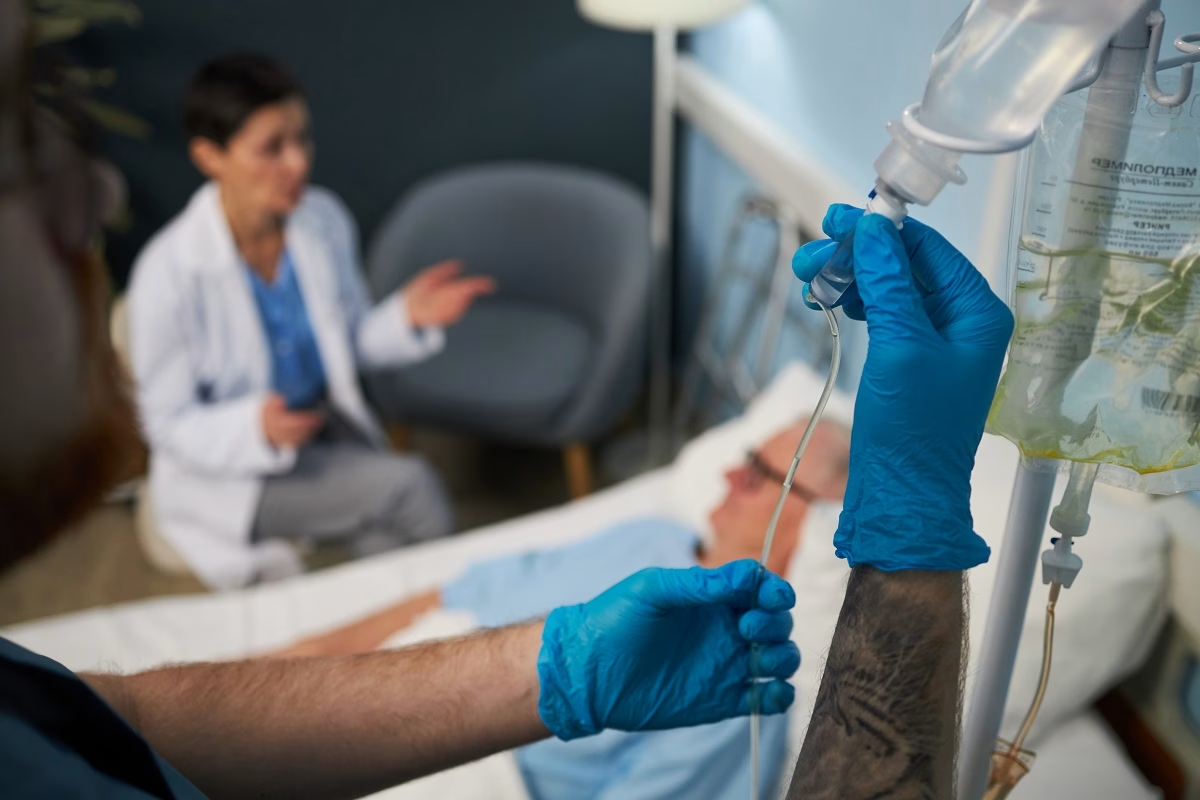
The treatment is often different among people with penile cancer. It depends on the exact location and size of the tumor, whether it has spread, and how likely it is to return (recur), your age, and other factors. Usually, penile cancer treatment involves a team from primary care physicians (PCPs), oncologists (cancer specialists), urologists (urinary tract specialists), radiation oncologists, dermatologists, and others. Check below some treatments often recommended for people with a mild form of penile cancer:
- Circumcision – When the cancer develops on the foreskin only, the removal of this tissue can be the only treatment needed.
- Cryotherapy – During this treatment, doctors will deliver extreme cold to the tumor to destroy abnormal cells.
- Excision – This treatment involves the removal of the tumor from the penis.
- Laser ablation – This procedure uses lasers to create extreme heat and kill cancerous cells.
- Medicated creams – Doctors may recommend creams that contain Fluorouracil or Imiquimod to reduce the symptoms caused by the tumor.
- Mohs surgery – This treatment involves the removal of the cancerous skin layer by layer until reaching healthy tissue.
- Radiation therapy – This is a cancer treatment that uses powerful energy beams to destroy cancerous cells. This energy often comes from protons, X-rays, or other sources. Sometimes, it is recommended by doctors before surgery to shrink a large tumor.
If you develop a more advanced form of penile cancer, doctors may also recommend the following treatment options. Check below some of them:
- Lymphadenectomy – This procedure is used to remove the lymph nodes (usually in the groin area) when the cancer spreads.
- Partial or total penectomy – This treatment is used to partially or totally remove the penis.
Frequently Asked Questions
When should I see my healthcare provider?
If you notice changes that affect your penis or worsening of existing symptoms, it is advised to visit a doctor as soon as possible.
What can I expect if I have penile cancer?
In general, the recovery chance depends on several factors. For example, the stage, location, and size of the tumor, whether the cancer has just been diagnosed or has recurred, your age, overall health, and others. For more details, discuss it with your doctor.
What is the life expectancy of penile cancer?
The life expectancy is different among people with penile cancer. In general, for localized penile cancer, the 5-year survival rate is around 65% to 79% in the U.S. Ask your healthcare provider if you have additional questions.