
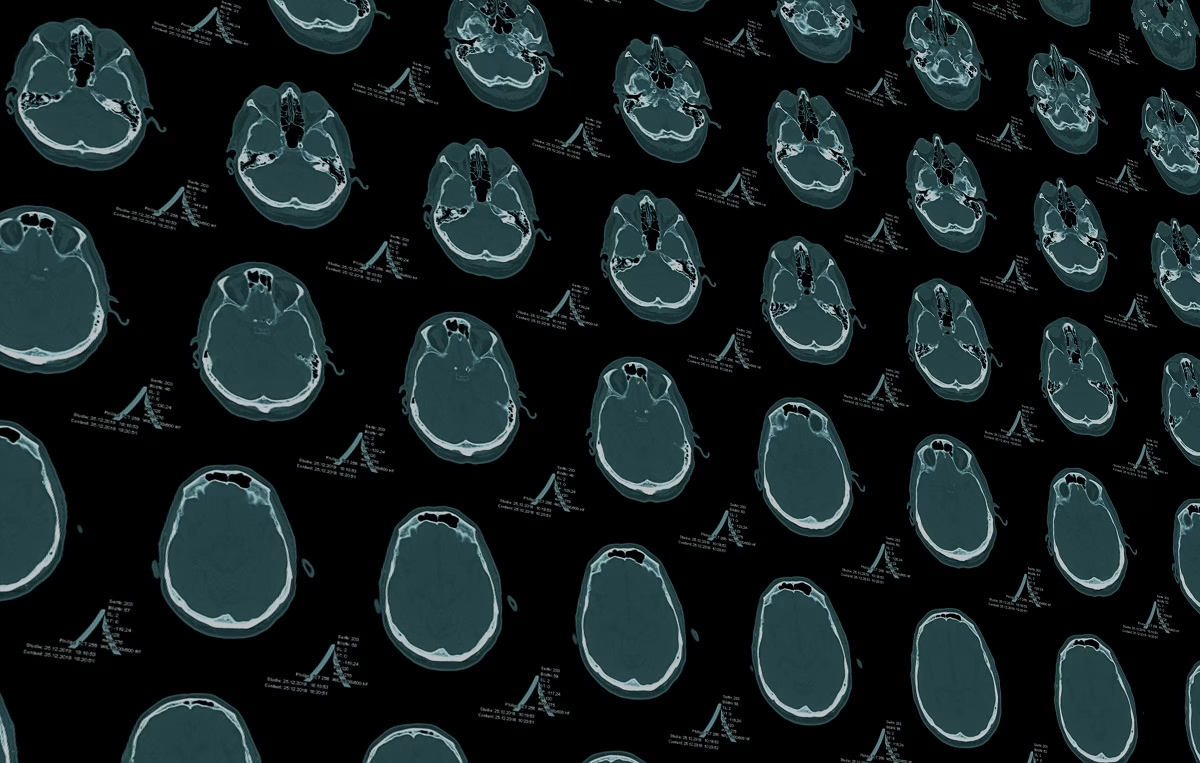
A type of cancerous (malignant) brain tumor that begins to develop near the brainstem in the cerebellum is called medulloblastoma. It is a fast-growing tumor that can easily spread to other parts of the brain and spinal cord. Commonly, medulloblastoma affects children. Doctors often prescribe surgery, radiation therapy, and chemotherapy to treat this type of cancer.
In other words, medulloblastoma is a malignant tumor of the central nervous system (CNS) that develops in the cells of the cerebellum. It rarely affects adults and mostly affects children and teens under 16 years old. In general, medulloblastoma is a rare type of cancer that affects about 437 children and adults in the U.S. each year. Most diagnosed cases are in children from 5 to 9 years old.
Symptoms
The symptoms of medulloblastoma appear differently among people who develop it because they depend on several factors. Examples include age, size, stage, and exact location of the tumor, gender, and overall health. Check some general symptoms below:
- Vision changes
- Problems with walking and balance
- Back pain
- Dizziness
- Headaches
- Nausea
- Vomiting
- Tiredness
- Urinary or bowel incontinence (accidents with urinating or stool)
If you or your child experiences any of the symptoms listed above, immediately contact your healthcare provider. Otherwise, the cancer may spread to other parts of the body.
Causes and Risk Factors
This type of cancer develops due to DNA changes (mutations) in specific cells. In such cases, DNA mutations occur in the cells of the cerebellum. Normally, DNA holds instructions that tell cells when to grow, multiply, and die. However, in people with medulloblastoma, DNA gives the cells different instructions, which causes uncontrolled growth of these cells. Nowadays, researchers do not fully understand what exactly causes these DNA changes.
Furthermore, physicians have identified some factors that could elevate your risk of developing medulloblastoma. Check some examples below:
- BRCA1 gene mutations – BRCA1 (breast cancer gene1) and BRCA2 (breast cancer gene 2). These genes produce proteins that help repair damaged DNA. If you inherit certain variants of these genes, you are at increased risk of developing multiple types of cancer.
- NBCCS (nevoid basal cell carcinoma syndrome) – This condition is also known as Gorlin syndrome, and it often occurs along with basal cell skin cancers. Moreover, approximately 5% of people with NBCCS are at increased risk of medulloblastoma.
- Turcot syndrome – Those who develop this syndrome also have colon cancer with a tumor in their CNS (such as a medulloblastoma or pituitary adenoma).
- Li-Fraumeni syndrome – This syndrome increases the risk of multiple types of cancer. These include sarcomas, breast cancer, other types of brain cancer (including gliomas and choroid plexus carcinomas), adrenal cancer, and leukemia.
- Gender – While anyone may develop this type of cancer, it affects males more than females.
What Are The Potential Complications of Medulloblastoma?
Those who develop medulloblastoma may also experience some complications, especially if they ignore the symptoms or do not get immediate treatment. Check some complications below:
- Hydrocephalus – This is a serious condition that causes a buildup of fluid in the brain.
- Posterior fossa syndrome – It is a complication that often causes speech loss, dysphagia (swallowing problems), and behavioral changes (rarely). In most cases, it occurs after surgery.
- Neurological problems – For example, ataxia (loss of balance and coordination), vision changes (such as double vision), facial weakness, and others.
- Treatment complications – Sometimes, people may develop the following complications after surgery. For example, somnolence syndrome (extreme sleepiness), bleeding, infections, and others.
- Cognitive and developmental issues
- Endocrine problems – These include hypothyroidism (underactive thyroid gland), infertility, and others.
- Sensory loss
- Secondary cancers
- Recurrent medulloblastomas
- Spinal metastasis – In such cases, the cancer spreads to the spinal cord.
This document does not contain a complete list of medulloblastoma complications. In any case, your doctor may help reduce the risk or even prevent them. For more details, discuss it with your physician.
How Doctors Diagnose Medulloblastoma?
First, doctors will perform a physical examination to check for irregularities linked to the disease. Thus, they may ask some questions about your symptoms and medical history to gather more information about the condition. In any case, to rule out other health conditions that cause similar symptoms to medulloblastoma, physicians will perform the following tests and procedures. Check some examples below:
- Neurological examination – During this examination, doctors often check your hearing and vision along with coordination and reflexes. It may help identify the affected part of the brain.
- Imaging tests – The following tests are used to get detailed images of different structures and organs in the body. Commonly, they perform an MRI (magnetic resonance imaging) or CT (computerized tomography) scan.
- Biopsy – During this test, physicians will take a small sample of the tumor for testing. Thus, the pathologists will check for cancerous cells. In general, if your doctor performs a biopsy because imaging tests are not enough to confirm medulloblastoma.
- Lumbar puncture (also known as a spinal tap) – During this procedure, surgeons will take a sample of cerebrospinal fluid (CSF) to check it for cancer cells.

Treatment
Usually, treatment for medulloblastoma depends on multiple factors. For example, your age, existing health problems, gender, the location and size of the tumor, and preferences. Check below the most common options used to treat medulloblastoma:
- Surgery – During this procedure, a neurosurgeon will help reduce pressure buildup on the brain and remove the tumor. When a complete removal of the tumor is not possible, doctors may recommend additional treatments.
- Radiation therapy – This therapy uses powerful energy beams to destroy cancerous cells. While this energy often comes from protons or X-rays, it may also come from other sources. Moreover, physicians may recommend radiation therapy along with chemotherapy to improve the effectiveness of the cancer treatment or when surgery is not an option.
- Chemotherapy – This is another cancer treatment that involves strong medicines to destroy cancerous cells throughout the body. While most people receive chemotherapy intravenously (IV), a pill form is also available. Usually, doctors prescribe chemotherapy before surgery to shrink a large tumor, after surgery to destroy cancer cells that may remain even after a successful surgery, or in combination with radiation therapy.
Frequently Asked Questions
When should I see my healthcare provider?
Do not hesitate to visit a doctor if you or your child has a combination of the following symptoms. These include headaches, nausea, confusion, or vision problems. Moreover, people who leave medulloblastoma untreated may experience life-threatening complications.
How long does it take to recover from medulloblastoma?
Generally, the recovery time varies among people because it depends on the type, location, and stage of the cancer. For instance, people often need between 4 and 8 weeks to recover after a brain surgery. However, if the cancer is treated with radiation therapy and/or chemotherapy, it may take a few weeks to months to recover. For more details, discuss it with your physician.
Can you survive medulloblastoma?
Most of the time, people with this type of cancer survive. However, this is an aggressive and fast-growing cancer that requires immediate treatment. Otherwise, it easily spreads to other parts of the body, which makes it more difficult to treat. If you have any other questions, ask your healthcare professional.