
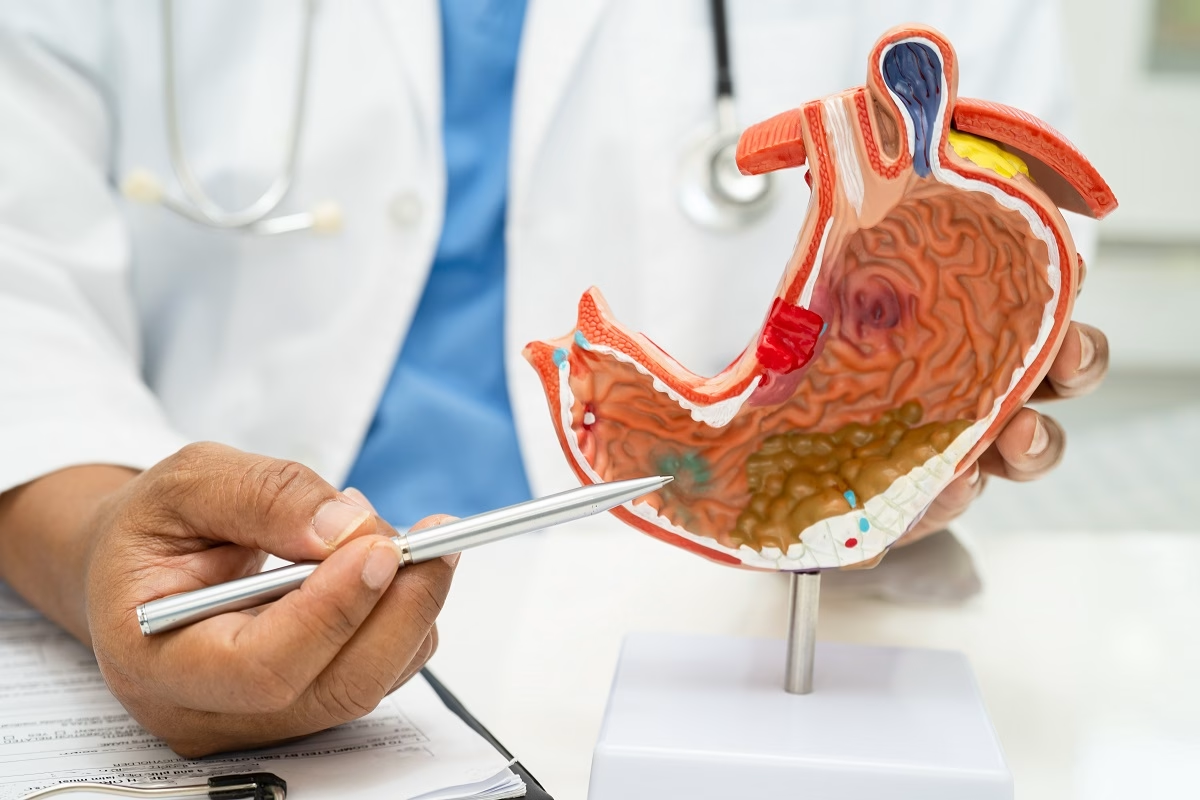
A health condition in which there is a split of the inner layer of the esophagus caused by forcefully vomiting, retching, or straining is called a Mallory-Weiss tear. The most common symptoms include vomiting blood and dark and sticky stools. Without immediate medical help, it may lead to serious health problems. In most cases, Mallory-Weiss tears disappear on their own.
Generally, the esophagus is a tube that connects the mouth to the stomach. In people with this condition, the inner lining of this tube splits open and begins to bleed. The medical term used to describe these splits is Mallory-Weiss tears. They often occur at the part of the esophagus that meets the stomach.
The name of this condition comes from two physicians named Kenneth Mallory and Soma Weiss. They first described this condition in 1929. It happens in the lower esophagus in people who have experienced forceful retching or vomiting (such as after drinking too many alcoholic beverages).
According to some research, this condition occurs in about 1% to 15% of people with esophageal or stomach bleeding.
Symptoms
While the most common symptom of this condition is vomiting blood (which occurs in about 85% of cases), it may also cause other symptoms. Check some symptoms associated with Mallory-Weiss tears below:
- Fainting
- Dizziness
- Dark and sticky stools
Immediately contact your healthcare professional if any of the previous symptoms occur.
Causes and Risk Factors
In general, these tears appear due to increased pressure in the abdomen. According to some research, the abdominal pressure forces the contents of the stomach into the esophagus, leading to tears. Check other causes of increased abdominal pressure below:
- Severe vomiting or retching
- Prolonged coughing
- CPR
- Trauma to the abdominal area or chest
- Heavy lifting or straining
While anyone may develop these tears, doctors have identified some factors that may increase your risk of developing them. For instance, it mostly affects people between the ages of 40 and 60, and it is more commonly diagnosed in men than women (about 4 times). Check some conditions that may also increase the risk of Mallory Weiss tears below:
- Heavy alcohol use – Approximately 60% of people who develop these tears misuse alcoholic drinks.
- Bulimia – This is an eating disorder that often causes bingeing and vomiting.
- Cyclic vomiting syndrome (CVS) – This is a health condition in which multiple attacks of nausea, vomiting, and exhaustion occur.
- Esophageal varices – Enlarged veins in the esophagus.
- Hyperemesis gravidarum – This is a condition that causes severe nausea and vomiting during pregnancy.
- Gastroesophageal reflux disease (GERD) – In such cases, the stomach acid backs up into the esophagus and even the mouth.
- Portal hypertension – This type of high blood pressure (hypertension) occurs in the veins that carry blood from the digestive organs to the liver.
Moreover, Mallory Weiss tears may also occur due to an upper endoscopy or transesophageal echocardiogram, but in rare cases.
What Are The Potential Complications of Mallory Weiss Tear?
Those who leave this condition untreated may experience some complications, including anemia (low red blood cell count), fatigue (extreme tiredness), and dyspnea (shortness of breath). However, if the tear causes severe internal bleeding, it may lead to the symptoms of shock. These include:
- Dry mouth
- Extreme thirst
- Anxiety
- Agitation
- Nausea
- Pale and cold skin
- Fast heartbeats
- Shallow or fast breathing
- Weakness
- Heart palpitations
Moreover, Mallory Weiss tears may also cause other complications. For example:
- Metabolic disturbances (such as imbalances in the body chemistry caused by blood loss)
- Myocardial infarction (also called a heart attack)
- Esophageal perforation
- Recurrent Mallory Weiss tears
- Hematemesis (vomiting large amounts of bright red blood)
- Black or tarry stools
- Hypotension (low blood pressure)
The previous list does not contain a full list of Mallory-Weiss tear complications. In any case, you can consult with your healthcare professional about measures to reduce the risk or even prevent them.
How to Prevent Mallory Weiss Tear?
In general, it is possible to prevent this condition by avoiding persistent and forceful vomiting and misuse of alcoholic beverages, which are the most common causes of Mallory Weiss tears. If you need help, discuss it with your healthcare professional.
Diagnosis
If you notice signs of gastrointestinal bleeding, doctors will perform the following procedures. For example:
- A physical examination to check for irregularities linked to the disease, and may ask some questions about your medical history (especially conditions that cause vomiting, retching, straining, or coughing)
- Get a blood sample to perform a complete blood count (CBC), coagulation profile, or kidney function test.
- Assess you for severe bleeding or shock that may need immediate treatment
Furthermore, doctors usually use upper endoscopy to confirm or rule out Mallory Weiss tears. This procedure may also help rule out other disorders of the esophagus. This test involves a small and flexible tube with a lighted camera on the end that allows your doctor to examine the esophagus and the upper part of the stomach.

Treatment
Mostly, the bleeding in people with these tears stops within 3 days on its own. However, doctors may prescribe some medicines to help the stomach and esophagus healing process. For example:
- H2-receptor blockers
- Proton pump inhibitors
When Mallory Weiss tears continue to bleed, doctors may recommend surgery. Commonly, physicians recommend endoscopic treatments. For example:
- Endoscopic injection therapy – Doctors may give you an injection of Epinephrine through the endoscope to stop bleeding and close the blood vessels around the tear. However, this medicine cannot be given to patients with coronary artery disease.
- Endoscopic electrocoagulation – This treatment involves several techniques to seal the tear using an electrical current.
- Endoscopic hemoclip – This treatment involves a small metal clip that the surgeon will deliver through an endoscope to pinch the tear closed.
- Endoscopic band ligation – During this type of endoscopy, physicians will insert a tube through the endoscope to cover and tear with the end of the tube. Therefore, the band sucks in the tissue and wraps it with a band. As a result, bleeding stops.
When any of the previous treatments do not work (including medicines and endoscopy), physicians may recommend angiotherapy. It targets the blood vessels that feed blood to the torn area. During this procedure, surgeons will use a catheter to reach the artery and then inject the drug (such as vasopressin) to close off the artery and plug it with gel. If even angiotherapy does not stop bleeding, physicians may perform another minimally invasive procedure called laparoscopy. It is used to sew the tear closed.
Frequently Asked Questions
Can Mallory Weiss tears be cured?
In most cases, these tears heal on their own without treatment and recur rarely.
What can I expect after treatment for a Mallory-Weiss tear?
In general, people diagnosed with these tears are monitored by a healthcare team until they get treatment and recover completely.
What conditions put me at higher risk for Mallory-Weiss tears?
The most common risk factors for Mallory-Weiss tears are alcohol use disorder and gastrointestinal reflux disease (GERD). However, there are other conditions that may also increase the risk of these tears. These include CVS, bulimia, hyperemesis gravidarum, and others. If you have additional questions, ask your healthcare provider.