

A type of frontotemporal dementia (FTD), which is a degenerative disorder that often negatively affects people over 65 years old and causes behavioral changes, is called Pick’s disease. In some cases, it may also disrupt the ability to speak and understand other people. While this disorder cannot be cured, there are some treatments that may relieve the symptoms and improve your quality of life. In general, healthcare professionals use Pick’s disease when it meets specific criteria.
How Does This Disorder Affect My Body?
This disorder negatively affects the neurons (brain or nerve cells), causing them to gradually stop working. Over time, a person with a neurodegenerative disorder usually loses certain abilities according to the affected part of the brain. Furthermore, Pick’s disease has some similarities to Alzheimer’s disease but has some key differences and often happens earlier.
Additionally, this type of FTD tends to affect specific parts of the brain and not others. In most cases, it causes behavior and language ability problems. Moreover, people with this disorder cannot recognize that they have a problem or medical condition.
What is The Difference between Pick’s Disease and Niemann-Pick Disease?
Generally, these disorders do not have connections other than the coincidence of the name “Pick”. Pick’s disease gets its name from Arnold Pick, which is a Czech neurologist and psychiatrist who first identified and described this condition in 1892.
However, Niemann-Pick disease is named after two German physicians, Albert Niemann and Ludwig Pick. In people with this disorder, the body cannot store and process lipids properly. These include chemical molecules that make up fats, oils, waxes, fatty acids, and others. As a result, these lipids begin to build up in the body, which can cause damage to the brain, liver, spleen, bone marrow, lungs, and other structures and organs in the body.
How Common is Pick’s Disease?
According to some data, Pick’s disease affects between 15 and 22 per 100,000 people. However, some healthcare providers believe the accuracy of this number is in doubt, and the real number of affected people is higher. That’s because this disorder is almost impossible to diagnose while you are alive and very difficult after death.
Symptoms
Mostly, Pick’s disease occurs in two primary ways. While one way affects the behaviors, the second impacts the language areas of the brain, causing a disorder called primary progressive aphasia. Check below some symptoms of this disorder:
Behavioral Variant FTD
The symptoms of this type of condition are divided into 6 categories. For example, loss of inhibitions, apathy, loss of empathy, compulsive behaviors, changes in diet or mouth-centered behaviors, and loss of executive function.
Loss of Inhibitions
An inhibition occurs when the brain tells you not to do something. In people with Pick’s disease, this part of the brain can be damaged, which leads to an inability to hold back from saying or doing things that are not appropriate. Commonly, it occurs in one of the following ways. Examples include:
- Loss of a “filter” for what they say (in such cases, people with Pick’s disease often say things that are hurtful, rude, or offensive)
- Lack of respect for other people (including frustration and outbursts of anger)
- Impulsive actions and behaviors (such as irresponsible spending or even shoplifting)
Apathy
Usually, physicians diagnose depression when a person has apathy symptoms because they look so alike. In most cases, apathy involves the following:
- Loss of motivation (reduced interest in things you previously enjoyed, such as hobbies or relationships)
- Social isolation (avoiding spending time with other people, such as friends, family, and loved ones)
- Decline in self-care (reduced or lack of interest in bathing and grooming)
Loss of Empathy
This symptom is also known as “emotional blunting”, and it means people with this type of symptom have difficulty reading the emotions of other people.
Compulsive Behaviors
Those who suffer from Pick’s disease often behave differently from people without this disorder. For example:
- Repetitive motions – These include small-scale movements (such as clapping their hands, tapping their feet, pacing, and others).
- Complex or ritual-like behaviors – Compulsively watching the same movies, reading the same books, or collecting types of items.
- Speech repetition – People with Pick’s disease can say the same sounds, words, and phrases multiple times.
Changes in Diet or Mouth-centered Behaviors
Most people with Pick’s disease usually show an abnormal level of mouth-centered interest or behavior. It often includes the following:
- Dietary changes – In such cases, people are more focused on eating or drinking things they like, such as sweets, snacks, or alcohol. One of the most common symptoms that follows previous ones is weight gain.
- Mouth-related compulsive behaviors – These include smoking, binge eating, as well as oral exploration. While oral exploration is normal in babies as they explore objects and the world around them, it is an unusual behavior in adults.
- Pica – This is a mental health condition in which people eat non-food items without nutritional value. While the most commonly eaten things include coins, dirt, and pebbles, they can also eat other non-food items.
Loss of Executive Function
In general, the executive function is the ability to plan out the day, solve problems, and carry out tasks. It also helps with your judgment and organizing things. However, most people with Pick’s disease have problems with executive function. A part of this criterion is that other abilities (such as memory and the way your brain processes what you see are not affected. It divides frontotemporal dementia from Alzheimer’s disease.
Primary Progressive Aphasia
This health condition can also cause a gradual loss of language skills (including the ability to speak and understand other people). In general, there are 3 primary subtypes of primary progressive aphasia (PPA), and 2 of them can occur with Pick’s disease. For example:
- Nonfluent variant (nfvPPA) – In such cases, you may have problems with forming words and using grammar properly. While you can understand the words that other people are saying, it can be difficult to understand complicated sentences.
- Semantic variant primary progressive aphasia (svPPA) – In people with this type of PPA, it becomes difficult to choose or understand the right word. They can also have problems with reading and writing.
Causes
This type of frontotemporal dementia has a very specific cause. In general, all nerves and brain cells contain a specific protein called tau. In normal circumstances, tau proteins have a specific shape. Otherwise, they are not working properly. Therefore, malfunction of these proteins can lead to their buildup, which causes damage and can destroy neurons. Furthermore, these destroyed neurons are known as “Pick cells,” and they have a swollen and balloon-like shape. Nowadays, experts still do not understand why the tau proteins malfunction. According to some research, healthcare providers have linked Pick’s disease to some genetic mutations (changes), but most diagnosed cases are not inherited. It means the abnormal genes do not pass from biological parents to their children during pregnancy.
This disorder often happens spontaneously and for unknown reasons. That’s why there is no way to prevent or reduce the risk of developing it.
Risk Factors
While it is not possible to determine the exact cause of this disorder, physicians have identified some factors that could increase your risk of developing it. Check below some of them:
- MAPT gene variations
- Other gene mutations, including mutations in the VCP, CHMP2B, TBK1, and others
- A family history of FTD – If you have a parent or sibling with frontotemporal dementia, your risk of developing Pick’s disease significantly increases.
- Diabetes
- Head injuries
- Age – Usually, the onset of Pick’s disease occurs between the ages of 40 and 60.
What Happens if Pick’s Disease is Left Untreated?
Those who develop this disorder may also experience some complications, especially if they do not get treatment. Examples include:
- Mental health problems, including depression, paranoia, behavioral problems, and others
- Loss of motivation and interest
- Social impulsivity
- Repetitive or obsessive behaviors
- Aphasia
- Speech changes
- Incontinence
- Hypotonia
- Progressive functional decline
- Increased risk of infections
- Body system failure
This article does not contain a complete list of Pick’s disease complications. Furthermore, you can consult with your healthcare professional about ways to reduce the risk or even prevent previous complications.
Diagnosis
In most cases, the FTD diagnosis begins with physical and neurological examinations. Thereafter, physicians may ask some questions about the symptoms and family history to get more clues about the disease. In general, the only way to confirm Pick’s disease is to perform a test to check for Pick bodies and Pick cells. However, in most cases, this disorder is confirmed after a person has died. Check below some tests often used by doctors to confirm or rule out Pick’s disease:
- Blood tests
- Cerebrospinal fluid testing after a spinal tap (also known as a lumbar puncture)
- CT (computed tomography) scans
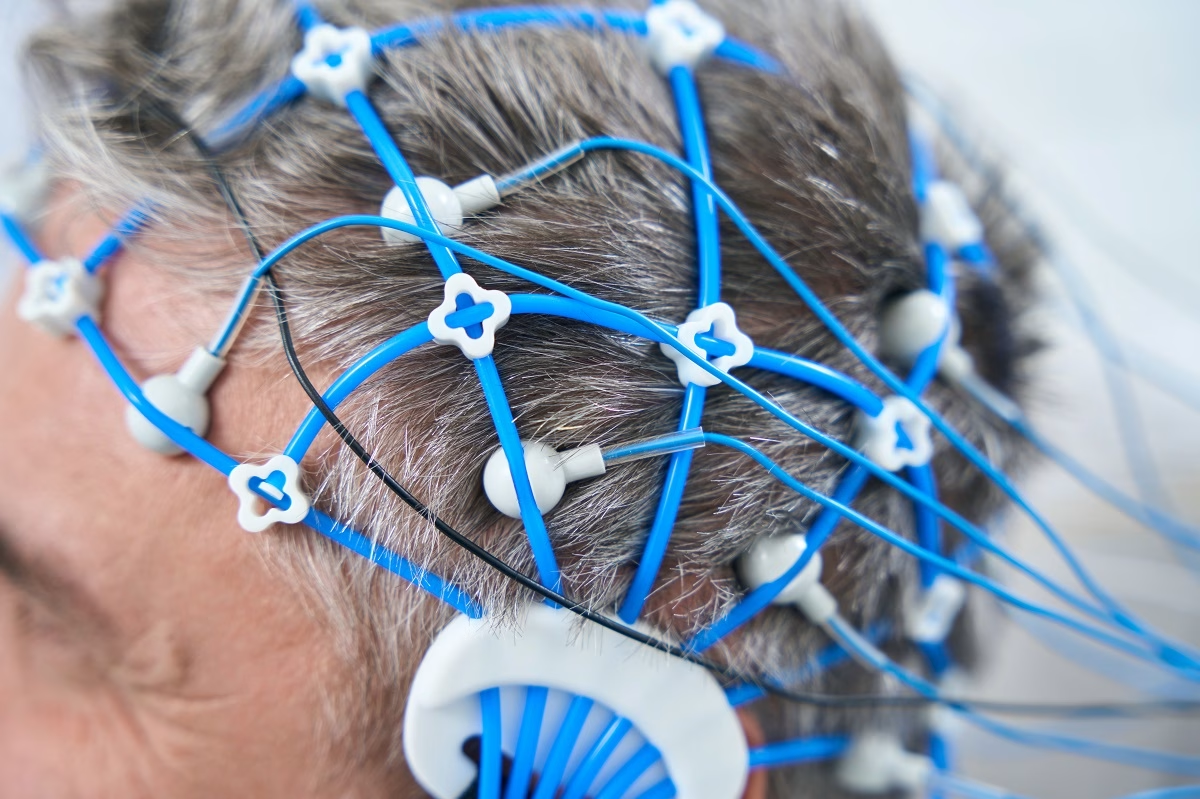
- Electroencephalogram (EEG)
- Genetic testing
- MRI (magnetic resonance imaging)
- PET (positron emission tomography) scan
Treatment
Unfortunately, there is no way to cure or slow down this disorder. In some cases, doctors may prescribe some medications to relieve the symptoms (such as depression, apathy, aggressive behavior, and others).
Frequently Asked Questions
How long does Pick’s disease last?
Generally, all types of FTD are lifelong disorders. However, there are some options that can ease the symptoms caused by these disorders. For more details, discuss it with your doctor.
Is Pick’s disease contagious?
While there is some evidence that people can inherit this disorder from biological parents during pregnancy, it cannot be passed from one person to another.
What is the life expectancy of someone with Pick’s disease?
The average life expectancy of someone with Pick’s disease is about 7 to 13 years after diagnosis. However, it varies significantly. For instance, some people can live more than 20 years, while some of them can live only 2 years after diagnosis. Ask your healthcare provider if you have additional questions.