
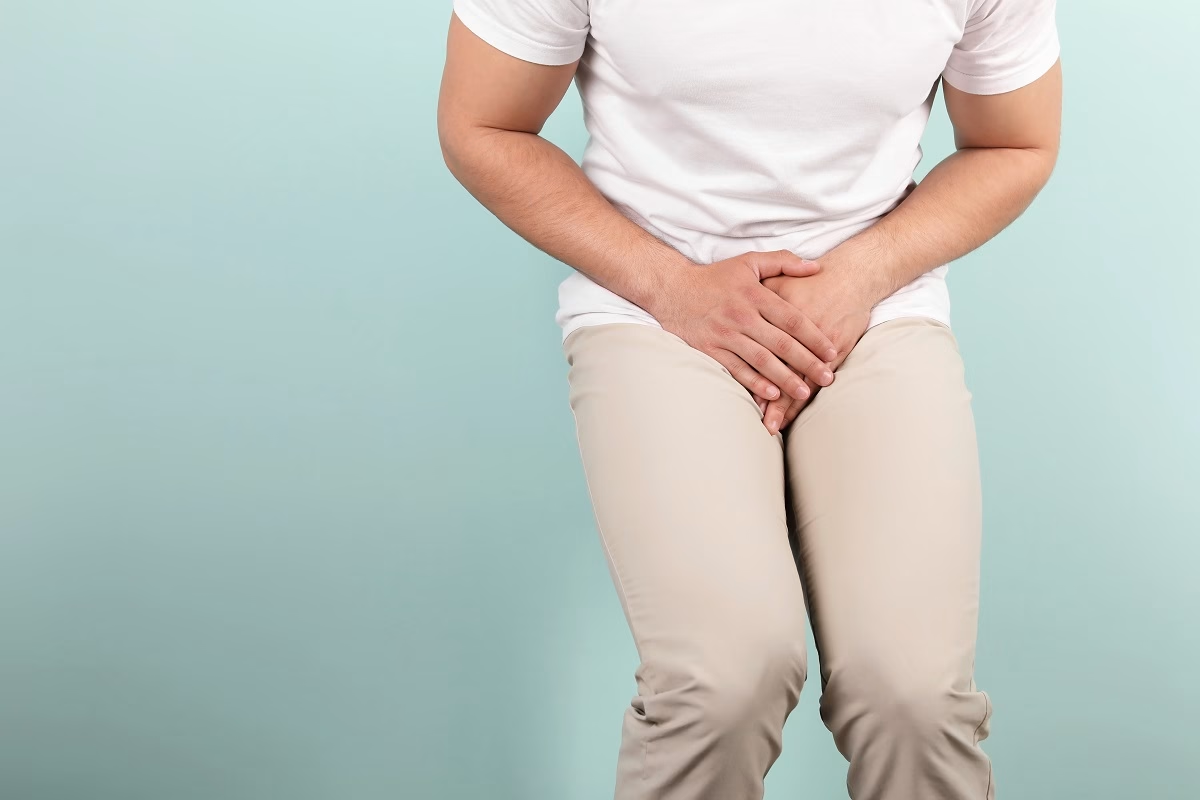
A health condition that causes a constant urine leak or dribble is called overflow incontinence. Usually, urinary retention causes overflow incontinence that occurs due to a bladder obstruction, enlarged prostate gland, or other problems that negatively affect the bladder. Healthcare professionals often recommend bladder training, medicines, and catheterization to treat this condition.
There are some people who think urine leakage is a natural part of aging, but it is not. Older adults (over 65 years old) are more likely to develop overflow incontinence, but it may happen to anyone. Usually, people with this condition feel embarrassed, frustrated, or angry about urine leaks. Do not hesitate to visit a doctor if you notice urine leakage.
In general, overflow incontinence is a common condition in the U.S., and it affects about 1 in 3 people. Furthermore, approximately 5% of people with long-lasting (chronic) urinary incontinence have also overflow incontinence.
Types of Incontinence
In general, there are several types of urinary incontinence. For instance, overflow incontinence is a rare form of urinary incontinence, but there are other forms. These include:
- Urge incontinence
- Stress incontinence
- Mixed incontinence (this form is a combination of stress and urge incontinence)
Symptoms
Usually, people with overflow incontinence experience frequent leaking or dribbling of pee, but may also experience other symptoms. Check some examples below:
- Difficulty urinating
- Feeling like you need to urinate when you cannot anymore
- Frequent urination
- Stopping and starting while urinating
Causes and Risk Factors
While the most common causes of overflow incontinence are chronic urinary retention or a too-full bladder, it may also occur due to other causes. Examples include:
- An increased urine amount due to diabetes or certain medicines (such as diuretics)
- Blockages that prevent the urine from leaving the bladder (such as bladder outlet obstruction) or passing through the urethra, and keep the bladder from completely emptying
- Weak muscle of the bladder or nerve damage
However, healthcare providers have identified some factors that could elevate your risk of developing overflow incontinence. For example:
- Prostate problems or surgery
- Benign prostatic hyperplasia (an enlarged prostate gland)
- Prostate cancer
- Anything that blocks the urethra
- Cancer treatments (such as radiation therapy or chemotherapy drugs)
- Diabetes
- Nerve damage
- Spinal cord injuries
What Happens if Overflow Incontinence is Left Untreated?
People who develop this form of urinary retention may also experience the following complications, especially if they leave it untreated. For example:
- Mental health issues – For example, isolation, anxiety, and depression
- Skin rashes and sores due to continuous skin exposure to urine
- Urinary tract infections (UTIs)
- Bladder, prostate, and kidney infections
- Formation of stones in the bladder that may cause irritation and pain
- Kidney damage
- Acute urinary retention (a complete blockage of the urine, which is a medical emergency)
- Sleep disturbances (insomnia)
- Low quality of life
This document does not contain all possible overflow incontinence complications. However, you can talk with your doctor about measures to reduce the risk or even prevent them. In addition, this type of urinary incontinence cannot be prevented.
Diagnosis
First, doctors perform a physical examination to check for abnormalities linked to overflow incontinence. This procedure may also include a pelvic examination or a digital rectal examination. Therefore, doctors may also ask some questions about your symptoms and medical history to get more information about your condition. Doctors may also perform the following tests to confirm or rule out this type of urinary incontinence. Examples include:
- Urine tests (also known as urinalysis) – Doctors will take a sample of urine to check for UTIs and blood in the urine (also called hematuria).
- Abdominal ultrasound – This is an imaging test that uses sound waves to produce images of the bladder, kidneys, and other organs.
- Cystoscopy – During this procedure, doctors will use a small and flexible tool with a lighted camera on the end to examine the urinary system.
- Voiding cystogram (VCUG) – This test involves a contrast dye and X-rays to examine the inside of the bladder as it fills up and empties.
- Urodynamic testing – This includes several tests done to determine how well your bladder and the rest of the urinary tract hold and release urine.

Treatment
A mild form of overflow incontinence can be managed with the following options. For example:
- Bladder training and timed voiding – This option involves using the bathroom at set intervals during the day to prevent the bladder from getting too full. Usually, a good interval to start is 2-3 hours.
- Double voiding – Sometimes, doctors recommend urinating again after you finish urinating, or you can put more effort to empty the bladder completely.
In moderate and severe cases, doctors may prescribe the following treatments. Check some examples below:
- Medicines – Doctors may prescribe specific medicines to shrink the enlarged prostate gland.
- Surgery – This option is often recommended by doctors to remove blockages.
- Self-catheterization (clean intermittent catheterization) – This treatment involves a catheter that is used to empty the bladder throughout the day.
- Indwelling catheterization – This catheter is inserted into the bladder, and it remains there for a long period. Therefore, a urine drainage bag is attached to this catheter that helps drain the urine from the bladder.
- Suprapubic catheter – This is also a permanent catheter that is inserted through the abdominal wall into the bladder. It helps remove the urine.
- Sacral neuromodulation (nerve stimulation) – This treatment involves a wire that is placed through the lower back along the nerve that supplies the bladder. It delivers a small electrical shock that helps the bladder squeeze better.
Overflow Incontinence Medications
Some people may need alpha-blocker medications that help shrink the prostate gland. Examples include:
- Silodosin
- Tamsulosin
- Terazosin
- Alfuzosin
- Doxazosin
Frequently Asked Questions
Can overflow incontinence go away?
In rare cases, a mild form of overflow incontinence may go away on its own without treatment. However, most people with overflow incontinence need treatment.
When should I see a healthcare provider?
It is recommended to see a doctor if any of the following symptoms occur. These include:
- Sudden urge to urinate
- Pain in the lower abdomen, lower back, or genitals
- Difficulty urinating
- Weak urine stream
- Inability to urinate
- Infection symptoms (such as fever, chills, and others)
- Hematuria (blood in the urine)
What is the difference between overflow incontinence and urinary incontinence?
Generally, overflow incontinence is a rare form of urinary incontinence that causes urine leakage or dribbling. However, people may develop other forms of urinary incontinence. Ask your healthcare provider if you have any other questions.