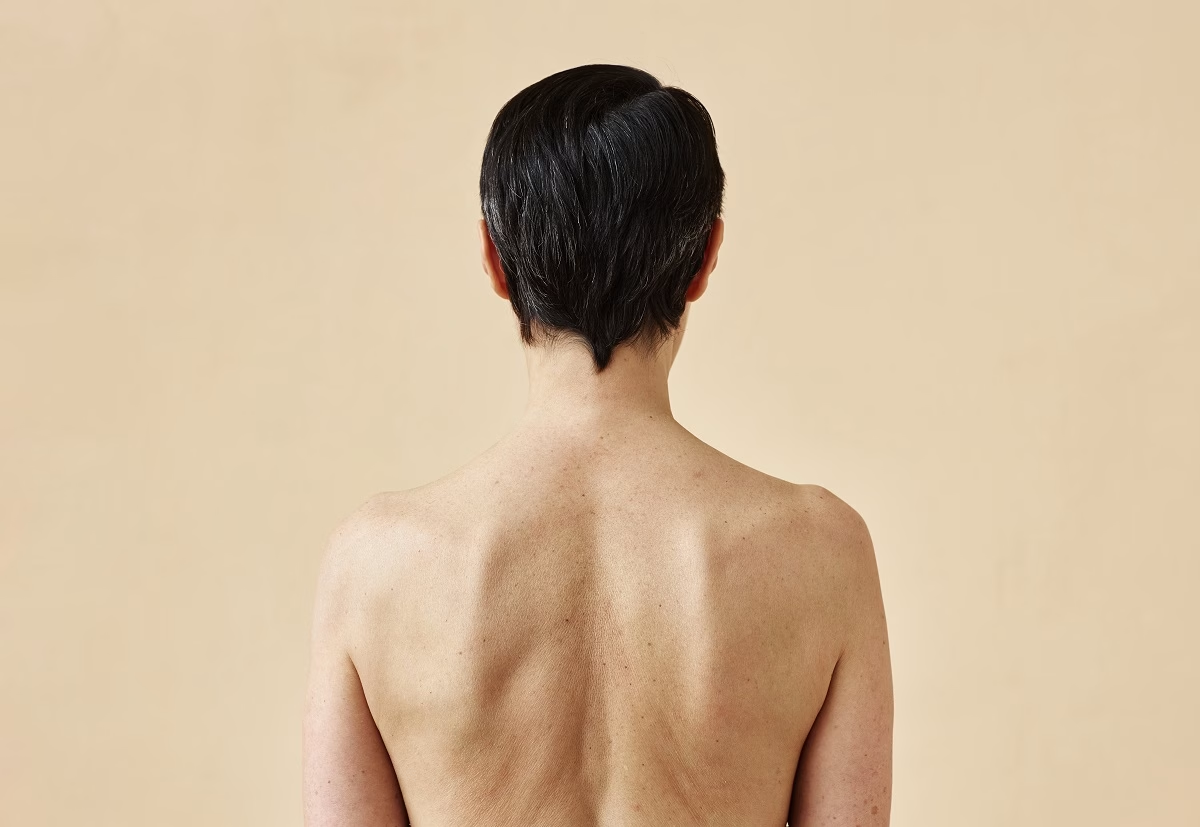
The medical term used to describe a curvature of the spine that happens due to an underlying health condition, including cerebral palsy, muscular dystrophy, or muscular atrophy, is known as neuromuscular scoliosis. Doctors often prescribe different treatments because they depend on several factors. These include the severity and underlying cause of the condition, age, existing health problems, and preferences.
In other words, neuromuscular scoliosis is a spine curvature that occurs along with other diseases that negatively affect the child’s muscles and nervous system. In such cases, the vertebrae do not align straight in the middle of the back but rotate off-center, which causes the child’s spine to form in an S or C shape.
Children with scoliosis may also experience other problems, such as one sleeve being longer than the other, and other problems. In most cases, the symptoms of scoliosis are noticeable during adolescence and growth spurts, but in children with neuromuscular scoliosis, the symptoms may appear earlier. In general, this is a progressive disorder that causes pain and other complications.
This condition commonly occurs with other nervous system and muscle disorders (including muscular dystrophy, atrophy, and cerebral palsy. About 90% people with Duchenne muscular dystrophy and 80% of those diagnosed with spinal muscular atrophy also have scoliosis. Moreover, approximately 20% to 70% of people with cerebral palsy will also develop scoliosis.
Symptoms and Signs of Neuromuscular Scoliosis
Check below some signs of this condition:
- Tilted waist and hips
- In some cases, the ribs may stick out on one side of the body
- Uneven shoulders
- Pressure sores
- Difficulty sitting
- Slanted pelvis
- Slouching to one side
Moreover, some children with scoliosis may also have other curves besides a sideways spine curve. For example, lordosis (swayback) or kyphosis (front-to-back curve).
Generally, this is a progressive disorder that often causes the following symptoms. For example:
- Discomfort (especially when sitting)
- Limited range of motion
- Problems with coordination and balance of the head, trunk, and neck
- Muscle weakness
- Numbness
- Back pain
If any of the previous symptoms occur in your child, immediately contact your healthcare professional.
Causes and Risk Factors
Usually, children develop neuromuscular scoliosis when an underlying disorder negatively affects their nervous system or muscles. Therefore, they are not able to move or control some of their muscles. As a result, the area around the spine weakens and causes a curve to appear. Check some health conditions often associated with this type of scoliosis below:
- Paralysis
- Spina bifida
- Spinal muscular atrophy
- Duchenne muscular dystrophy
- Cerebral palsy
Additionally, healthcare professionals have found that children with neuromuscular conditions who regularly use a wheelchair for mobility are at a significantly increased risk of developing neuromuscular scoliosis.
What Are The Long-term Effects of Neuromuscular Scoliosis?
In more severe cases, individuals with this condition may experience the following complications. These include:
- Respiratory problems (including trouble breathing, thoracic insufficiency syndrome, and others)
- Difficulty performing daily tasks (including getting dressed, eating meals, and others)
- Reduced mobility that causes walking problems
- Nerve damage
- Cardiovascular problems
- Skin breakdown
- Chronic back pain
- Treatment complications – For example, an increased risk of infections (such as pneumonia), bleeding, delayed healing, urinary tract infections (UTIs), and others
Children with this disorder may also have low self-esteem and experience some mental health conditions (such as anxiety or depression) due to their appearance. However, you can consult with your doctor about measures to improve your child’s emotional well-being.
In addition, there is no way to prevent this condition, but with early diagnosis and proper treatment, you can slow the progression and correct the curvature of the spine.
Diagnosis
First, doctors will perform a physical examination to check for irregularities linked to neuromuscular scoliosis. Therefore, they may ask some questions about the symptoms and medical history to get more information about this condition. Doctors often use a scoliometer to measure the curvature of the spine. However, to better examine the spine, physicians may perform some imaging tests, including a spine X-ray, an MRI (magnetic resonance imaging) scan, or a CT (computed tomography) scan.

Treatment
In most cases, doctors recommend nonsurgical options to slow the progression of the disease. If they do not help, doctors often recommend surgery to correct the curvature of the spine and slow down the progression.
Nonsurgical Options
These include:
- Wheelchair adjustments or changes – For example, doctors may recommend adding a custom seat backing or lateral supports to help the child balance or move more comfortably.
- Physical therapy – During this therapy, doctors will help teach you exercises to strengthen the muscles and improve mobility.
- Brace – This is not an option for everyone who has neuromuscular scoliosis, but it may help in some cases. For instance, a brace around the child’s torso may help balance while sitting.
Surgical Options
Doctors often recommend surgery for children with this disorder when:
- The spine curvature is more than 40 degrees and progresses
- Pain or discomfort
- Serious complications that negatively affect the lungs and heart function
Check some types of surgery used to treat neuromuscular scoliosis below:
- Spinal fusion – During this procedure, surgeons will realign the child’s spine and connect the affected vertebrae. They may also use bone grafts, metal rods, and screws to hold the bones in place until they heal. However, the fused bones are no longer growing, which may lead to short stature.
- Growing rods – This is the best option for children who are still growing. It involves a rod on the child’s spine that helps stabilize and correct the curvature. Usually, surgeons can lengthen the rod through a simple procedure or magnetic lengthening. It is often done every 6 months. Moreover, this rod is removed when the child reaches skeletal maturity.
Frequently Asked Questions
What is the prognosis for neuromuscular scoliosis?
In general, the outlook varies among children with this disorder because it depends on the following factors. For example:
- Overall health
- The type of underlying condition
- The severity and progression of the spine curve
- Their response to treatment
What is the life expectancy for neuromuscular scoliosis?
In general, this condition does not affect your child’s life expectancy, but neuromuscular scoliosis can cause serious complications (such as lung and heart problems), which can affect life expectancy.
Is the neuromuscular scoliosis progressive?
This is a progressive disorder that means it worsens over time. That’s why it is very important to get treatment as soon as possible. If you have any other questions, ask your healthcare provider.