
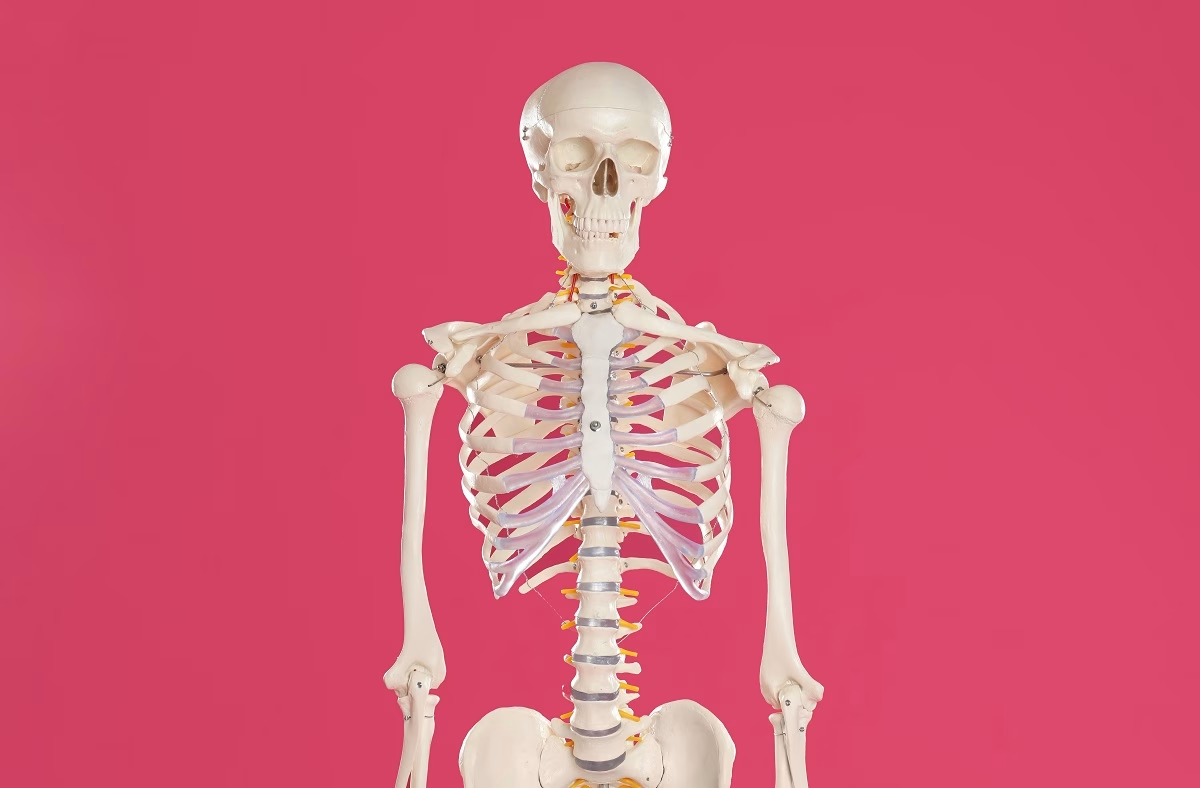
This is a rare bone condition that causes new bone tissue to grow on top of healthy bones. It often leads to irregularly thick and wide bones. People with melorheostosis may experience pain, limited range of motion, and certain skin changes. Unfortunately, there is no way to cure this condition. That’s why the treatment goal is to reduce the symptoms, prevent serious complications, and improve your quality of life.
In other words, melorheostosis is a bone condition that causes new bone tissue to grow on existing outer bone layers (also called cortical bones). While most of the time, this condition affects only one of the arms or legs, it may also affect other bones. The symptoms often begin during childhood or adolescence. Moreover, melorheostotis is a rare type of skeletal dysplasia, and doctors sometimes call it Leri disease.
In general, melorheostosis occurs very rarely, and it affects about 1 in 1 million people in the entire world.
How Does Melorheostosis Affect My Body?
People who develop this rare bone disease may notice that their bones are unusually thick or wide. It may also cause limited movement, joint deformities (contracture), or pain. When the bone grows, it may also cause specific skin changes (including skin thickening or shininess). Commonly, this condition does not spread to other bones, but it may worsen over time if it is left untreated.
Symptoms
Approximately 50% of people who develop this bone condition will experience symptoms before the age of 20. In most cases, the symptoms develop in childhood (sometimes, shortly after birth). If you do not get treatment for this condition, the symptoms may worsen over time. While most people experience symptoms in one leg or arm, melorheostosis may also affect the pelvis, breastbone (sternum), or ribs. Check some symptoms of this rare condition below:
- Hardened or shiny skin
- Chronic (long-term) pain
- Edema or lymphedema (swelling of the limbs due to fluid buildup)
- Limited range of motion
- Atrophy (muscle wasting)
- Uneven arm or leg lengths
If you or your child experiences any of the symptoms listed above, immediately contact your healthcare professional.
Causes
About 50% of people with melorheostosis develop it due to a random genetic mutation of a gene called MAP2K1. This gene is responsible for producing a type of protein that controls how bone cells grow. Moreover, this abnormal gene does not pass from the biological parents to their biological children. In addition, the rest 50% of people with this disease do not have a mutation in the MAP2K1 gene. In such cases, physicians call this condition idiopathic melorheostosis because they cannot identify what exactly causes it. In general, doctors do not find any specific environmental, dietary, or lifestyle factors that increase the risk of this condition. In rare cases, melorheostosis is associated with Buschke-Ollendorff syndrome or certain existing bone diseases.
What Are The Potential Complications of Melorheostosis?
Those who develop this rare bone disorder may also experience some complications, especially if they do not manage it. Check some examples below:
- Musculoskeletal deformities – People with this condition often experience progressive contractures of joints (including limbs, hands, and feet), and severe stiffness.
- Pain and reduced mobility – Sometimes, people with this condition experience long-term (chronic) and severe pain that is described as burning or along a specific dermatome.
- Structural problems – For example, limb length discrepancy, irregular bone growth, and an increased risk of bone fractures.
- Soft tissue and skin problems – These include fibrosis, muscle atrophy, and skin changes (including hyperpigmentation or scleroderma).
- Neurovascular compression – Some people with melorheostosis may also experience nerve or blood vessel compression due to dense bone growth.
- Recurrence – The removed abnormal bone tissue usually has high rates of recurrence.
This article does not contain all possible complications of melorheostosis. However, you can consult with your healthcare professional about measures to reduce the risk or even prevent them. In addition, there is no way to prevent this bone disorder because it often occurs sporadically.
Diagnosis
Like other health conditions, the diagnosis of melorheostosis begins with a physical examination to check for abnormalities linked to the disease. Thereafter, they may also ask some questions about the symptoms and your medical history to gather more information about your condition. However, to confirm or rule out this bone disorder, doctors often perform the following tests. For example:
- Bone scans – This test uses injections that contain a small dose of a radioactive material and imaging scans.
- X-rays – This test uses safe and low doses of radiation to examine the bones and soft tissues. Doctors often look for bone abnormalities present in people with melorheostosis.
- Genetic test – This test involves taking a sample of blood to check for the abnormal gene that causes this condition.

Treatment
There is no way to cure this condition. That’s why the treatment focuses on relieving the symptoms, preventing serious complications, and improving your quality of life. In most cases, doctors recommend the following options to manage the symptoms of melorheostosis. Examples include:
- Physical therapy – This treatment helps people with this condition increase strength and range of motion.
- Occupational therapy – It is used to improve fine motor skills and help you or your child perform daily activities (such as getting dressed or bathing).
- Medicines – Sometimes, physicians may recommend over-the-counter (OTC) or prescription nonsteroidal anti-inflammatory drugs (NSAIDs) to reduce pain and inflammation. They may also prescribe Bisphosphonates to strengthen the bones.
- Surgery – During this procedure, surgeons will remove excess bone growth or reshape bones.
Frequently Asked Questions
What conditions have similar symptoms to melorheostosis?
There are some diseases that may cause similar symptoms to melorheostosis. That’s why it is difficult to diagnose this bone condition. Check some examples below:
- Desmoid tumor
- Hemangioma
- Osteopathia
- Osteopoikilosis
- Scleroderma
- Buschke-Ollendorff syndrome
Where does the name melorheostosis come from?
The name of this condition is a combination of three Greek words. For example, melos (meaning limb), rheos (meaning flow), and ostosis (meaning bone formation).
Is melorheostosis serious?
While this condition negatively affects the bone and soft tissue growth and development, it usually does not affect life expectancy, and it is benign (noncancerous). However, melorheostosis can cause severe functional limitation, chronic pain, joint contractures, stiff muscles, and other symptoms. If you have any other questions, ask your healthcare provider.