
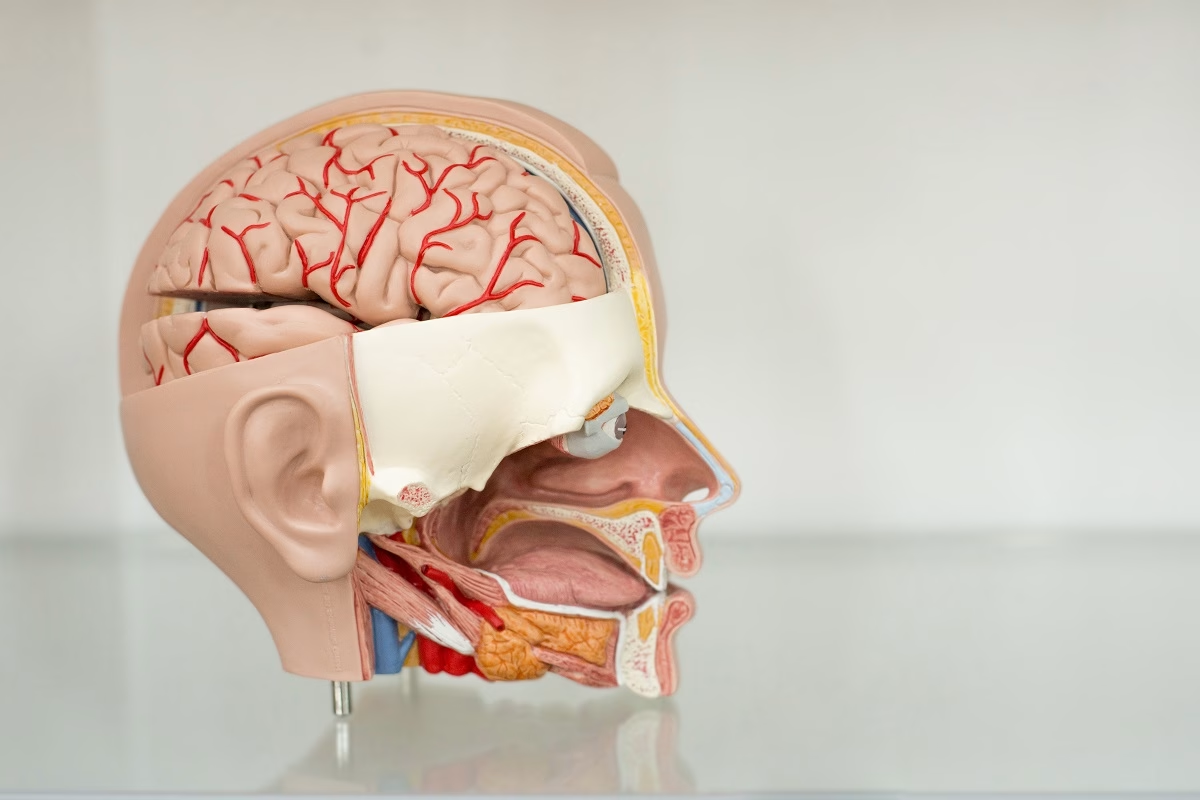
A disease that causes the baby’s head to become larger compared to other babies of the same age and sex is called macrocephaly. While a larger head size is often harmless, in some cases, it may indicate a serious health condition. These include an enlarged brain, a brain bleed, fluid on the brain, and other genetic disorders.
Babies who have this condition have a larger head compared to his/her other babies. Doctors often confirm this condition when the head circumference (they measure around the widest part of the head) is more than the 97th percentile. It means the baby’s head is larger than 97% of children of the same sex and age.
Sometimes, macrocephaly may indicate a serious health condition that requires treatment. Moreover, macrocephaly may run in families. In such cases, the condition is harmless and does not require treatment.
This condition affects about 2% to 5% of the U.S. population.
Symptoms
Check below the most common symptoms of macrocephaly:
- Fast head growth
- Developmental delays (difficulty reaching learning milestones)
- Downward gaze of the child’s eyes
- Bulging veins
- Appetite changes
- Other health conditions (such as autism, epilepsy, and others)
- Firm and bulging spaces between the bones of the child’s skull
When this condition runs in families, the babies experience only an enlarged head size. However, if your child experiences any of the previous symptoms, do not hesitate to visit a healthcare professional for a diagnosis and treatment.
Causes
In general, there are multiple causes of macrocephaly that range from harmless to severe. For instance, if you have a family history of macrocephaly, the condition is harmless, and the only symptom is an enlarged head size. If your child experiences additional symptoms, it may indicate a more serious health condition. Check some examples below:
- Megalocephaly (an enlarged brain)
- Hydrocephalus – This is a serious health condition in which fluid begins to build up in the brain.
- Bleeding in the brain (including arteriovenous malformation)
- Cranial hyperostosis (overgrowth of skull bones)
- Brain tumors
- Chronic hematomas – These are certain pockets of blood that often appear due to head injuries, falls, or shaking.
- Brain infections – For example, meningitis, encephalitis, or abscesses.
- Genetic conditions – These include achondroplasia, fragile X syndrome, neurofibromatosis type 1, PTEN hamartoma tumor syndrome (including Cowden syndrome), Gorlin syndrome, and Greig cephalopolysyndactyly syndrome
- Increased intracranial pressure
What Are The Potential Complications of Macrocephaly?
Children with this condition may also experience some complications. These include:
- Brainstem compression caused by an oversized brain that does not have enough room within the skull
- Hydrocephalus
- Epilepsy and seizures
- Developmental delays
- Abnormal brain function
- Other neurological problems (such as paralysis, cognitive disabilities, and others)
- Vision problems
- Physical deformities
The previous list does not contain a complete list of complications, but you can talk with your doctor about ways to reduce the risk or even prevent them.
How to Prevent Macrocephaly?
This condition does not always mean something harmful. If you notice that your child’s head is larger compared to other babies, you should visit a doctor for a diagnosis. While sometimes macrocephaly is harmless, other times, it may indicate a serious health condition (such as hydrocephalus). Moreover, there is no way to prevent this condition.
Diagnosis
In most cases, the diagnosis of macrocephaly begins with a physical examination to check for abnormalities linked to the disease. Therefore, doctors perform the following tests to get more clues about the disease. For example:
- Ultrasound – This is an imaging test that uses sound waves to produce detailed images of the head. It helps show most brain structures (especially the front-of-skull fontanel).
- CT (computed tomography) scans – This is another imaging test that makes cross-sectional pictures of different structures and organs in the body. It may help determine changes in brain tissue.
- Fast magnetic resonance imaging (MRI) – This is a specific type of MRI that can identify extra fluid in the child’s brain.

Treatment
Usually, the treatments prescribed by doctors are different because it depends on the underlying cause. For example:
- BESSI (benign familial macrocephaly and benign enlargement of the subarachnoid space in infancy) – When the child does not have neurological symptoms, the condition often does not require treatment. However, if the baby shows symptoms or extra cerebrospinal fluid (CSF) in the brain, he/she may need treatment.
- Macrocephaly associated with genetic conditions – In such cases, doctors may recommend physical therapy, occupational therapy, speech and language therapy, and behavioral therapy.
- Fluid buildup in the brain or brain bleed – Doctors often recommend surgery to relieve fluid buildup and stop a brain bleed.
- Brain tumors – The treatment depends on which tumor you develop. For example, if you have a benign brain tumor, surgery may be the only treatment needed. However, if you develop a malignant (cancerous) tumor, you may need additional treatments, such as chemotherapy and radiation therapy.
Frequently Asked Questions
When should I call my doctor?
You should call 911 or go to the nearest emergency room (ER) if your child experiences any of the following symptoms. Examples include:
- Bulging soft areas on the child’s head
- Vomiting
- Abnormal eye movements
- Sleeplessness
- Irritation
- Lack of appetite
What is the difference between macrocephaly and megalocephaly?
Generally, macrocephaly is a broader term that means an abnormally large head. Moreover, it can be caused by megalocephaly, which is an unusually large brain.
What is the main cause of macrocephaly?
Usually, this disorder occurs due to increased brain parenchyma (also known as megalocephaly) or increased cerebrospinal fluid (CSF). In rare cases, macrocephaly may occur due to thickened bone or increased intracranial pressure (ICP). If you have additional questions, ask your healthcare provider.